Game Overview
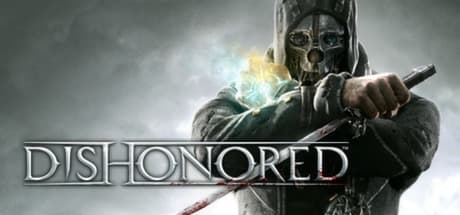
Dishonored: Supernatural Assassin Revenge Simulator is a first-person stealth-action game about Corvo, the former bodyguard framed for the Empress's murder. Released on October 9, 2012, it was developed by Arkane Studios and published by Bethesda Softworks.
The usual loop begins with gathering information at a hub, entering a spacious mission area, dealing with a target, and returning after the objective is complete. The route and method are not fixed.
Corvo can move across rooftops and pipes, bypass guards with supernatural powers, or draw weapons and fight directly.
Dunwall and the Revenge Story
The story takes place in Dunwall, an industrial whaling city where steampunk-like machinery exists beside forces from another world. A plague and political upheaval shape daily life while Corvo investigates the conspiracy behind the Empress's death.
Mansions, deteriorating districts, and industrial sites also reveal the city's inequality and methods of control.
Revenge drives the plot, but assassination is not always the only way to resolve a target. Conversations, documents, and information found around a level may reveal alternatives.
The game pays attention to how objectives are completed, allowing the player's conduct to affect the atmosphere and later events.
Supernatural Powers and Vertical Infiltration
Blink, a short-range movement power, defines much of the level design. It can cross a guard's line of sight, reach elevated ledges, create distance during combat, or open an unexpected escape route.
Looking above street level at windows, beams, roofs, and platforms is therefore as important as checking doors and corridors.
Other powers include possessing creatures or people and manipulating time. These abilities can interact with conventional weapons and unusual gadgets, but they are not unlimited solutions; resources and nearby security still matter.
Using a power to avoid danger can be more useful than spending it purely for an attack.
Direct combat with blades and firearms is viable, although being surrounded by several opponents can quickly become difficult. Checking patrol routes, alarms, traps, and an escape path before acting makes encounters more manageable.
A mixed approach also works: begin quietly, then use aggressive tools only when the infiltration fails.
Choice and the Chaos System
A violent run and one that limits detection and killing do not produce exactly the same state of the world. Instead of presenting every decision through a simple morality prompt, Dishonored accumulates the consequences of actions taken across missions.
The tension comes from choosing between destructive powers that are immediately satisfying and the harder task of controlling a situation without causing unnecessary harm.
Demanding a flawless non-lethal, unseen result on a first run can turn exploration into repeated loading. It is reasonable to continue after mistakes while learning the routes and uses of each ability.
Later playthroughs benefit from that knowledge, since alternative entrances and target resolutions can make familiar missions feel substantially different.
PC Requirements
The listed minimum configuration requires Windows Vista or Windows 7, a 3.0 GHz dual-core processor or better, 3 GB of system RAM, and 9 GB of storage.
The GPU requirement is a DirectX 9-compatible card with at least 512 MB of video memory, with the NVIDIA GeForce GTX 460 and ATI Radeon HD 5850 given as reference models. These are minimum requirements, not a promise of a particular resolution, image-quality preset, or frame rate.
No recommended configuration is included in the supplied data, so a specific modern CPU or GPU should not be presented as an official target. The listed operating systems are also old.
Players using a current Windows version should check present store information and verify driver, compatibility, and display-setting behavior on their own hardware.
Reception and Common Impressions
Dishonored has maintained strong player approval over the long term. Its most consistently praised qualities are the freedom to combine powers with level geometry, Dunwall's distinctive art direction, and missions that support both lethal and non-lethal solutions.
The game succeeds when a player's improvised route feels like a valid answer rather than a deviation from an intended path.
Potential frustrations follow from the same design. Chasing a perfect outcome can encourage constant saving and reloading, while rushing directly to markers may cause important environmental clues to be missed.
Players seeking uninterrupted gunfights may find the observation and route-planning phases slow, and limited guidance can feel confusing to anyone who prefers a tightly directed path.
Who Should Play It
Dishonored suits players who enjoy studying guard positions and designing their own approach. It is also a good match for anyone interested in powers that support traversal and evasion as well as combat, or in campaigns worth revisiting to test different consequences.
Its industrial setting, environmental storytelling, and dark revenge narrative are central attractions rather than incidental decoration.
Caveats and Who May Not Enjoy It
The supplied language list includes English, German, French, Italian, and Spanish, but does not list Japanese. Dialogue, documents, and optional information can matter to both navigation and world-building, so players who require Japanese support should confirm the current language listing before purchasing.
This is a weaker fit for players who want a linear action game, constant large-scale fights, or detailed guidance at every step. A low-harm outcome also requires restraint with some of the game's most destructive tools.
Finally, the source data mentions multiplayer, but the game described here is centered on Corvo's solo campaign; verify the edition, supported languages, and player modes on the current product page.


