Game Overview
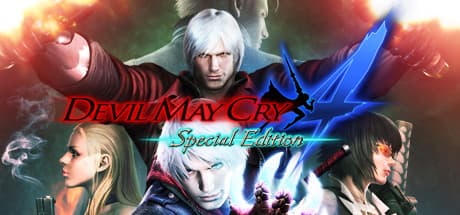
Devil May Cry 4 Special Edition: Unleash Stylish Action is a third-person action game where winning is only the baseline: the real goal is to vary attacks, preserve momentum, and turn each encounter into a deliberate combo. Set in the fortress city of Fortuna, its story follows Nero, a young knight with the demonic Devil Bringer arm, and the Order of the Sword, a religion devoted to Sparda.
Released on June 23, 2015, this edition expands the playable roster from Nero and Dante to include Vergil, Lady, and Trish.
A typical mission combines exploration, enemy arenas, environmental mechanisms, and a boss encounter. Performance grades encourage varied moves, sustained offense, and avoiding damage.
It therefore works best as a game to replay and refine rather than a campaign to clear once and immediately leave behind.
How the Five Characters Differ
Nero can pull enemies toward him or move toward distant targets with the Devil Bringer, making spacing easier to control during a combo. His Red Queen sword also uses the timing-based Exceed system, which rewards increasingly precise inputs with faster and stronger offense.
His basic plan is readable for newcomers, but there is ample room for technical improvement.
Dante switches among multiple weapons and styles to combine melee attacks, gunfire, mobility, and defense. The number of options can be intimidating at first.
Once weapon and style changes become part of a combo, however, he provides some of the most expressive combat in the game.
Vergil emphasizes deliberate positioning, concentration, rapid movement, and katana sequences. Lady manages distance primarily through firearms, while Trish combines unarmed attacks with the sword Sparda, which can be deployed away from her.
These characters substantially alter range, priorities, and combo structure rather than functioning as cosmetic alternatives.
Difficulty and Replay Value
Legendary Dark Knight mode increases enemy density, turning crowd control, area attacks, and positioning into central concerns. Turbo Mode raises the game speed and is better suited to players who already understand their moves.
Learning the standard encounters and purchasing useful abilities before committing to these options makes their purpose much easier to appreciate.
Early on, it is better to stabilize a short sequence—launching an enemy, following into the air, and pulling the target back—than to chase the highest style rank immediately. Repeating one move makes offense predictable, so adding gunfire, throws, and alternative ground attacks is useful.
Advanced character-specific techniques become less frustrating after movement, defense, and short combos feel dependable.
PC Requirements
The minimum specification lists a Core 2 Duo at 2.4GHz or Athlon X2 at 2.8GHz, 2GB of RAM, and either a GeForce 8800 GTS or a Radeon HD 3850 with at least 512MB of memory.
The recommendation rises to a Core i3 at 3.0GHz or FX-4100 at 3.6GHz with a GeForce GTX 570 or Radeon HD 7790.
Both tiers require DirectX 10 and 27GB of available storage.
Check the review panel on this page or the Steam listing for the latest user review trend.1.
Capcom also notes that some high-end integrated graphics solutions and modern gaming laptops with discrete GPUs may work but were not tested or officially supported. Owners of newer Windows systems or integrated-only laptops should check current compatibility reports instead of assuming that low hardware requirements guarantee trouble-free operation.
Reception and Common Feedback
The game has maintained a positive reputation over time, with combat depth, distinct character design, and repeatable missions among its most frequently appreciated qualities. It offers a clear progression from simple launch-and-follow sequences to demanding combinations involving weapon changes and cancels.
That makes mechanical improvement unusually visible and rewarding.
A common reservation concerns the campaign structure. Parts of the journey revisit locations and bosses, and the extra characters do not receive wholly separate sets of new stages.
Enjoyment therefore depends partly on whether replaying familiar encounters with a different combat system feels valuable to you.
Who Should Play It
This is a strong fit for players who want to invent and practice combos rather than merely react to enemy attacks. Those who enjoy score improvement, higher-difficulty clears, and learning several control schemes will find substantial value beyond the ending.
It particularly rewards anyone who sees practice itself as meaningful progress.
Caveats and Who May Not Enjoy It
The combat asks players to learn precise timing and several simultaneous button functions. Anyone seeking effortless spectacle with minimal practice may find that requirement tiring.
Dante can be especially overwhelming if every weapon and style is introduced into practice at once, so learning one tool at a time is advisable.
Missions also contain traversal and environmental mechanisms, so this is not an uninterrupted boss-rush game. Reused spaces may disappoint players who prioritize constant visual novelty or a large amount of new story content.
Finally, the older operating-system listing and limited official testing of modern laptops are important caveats for anyone who requires explicit support for a current PC configuration.