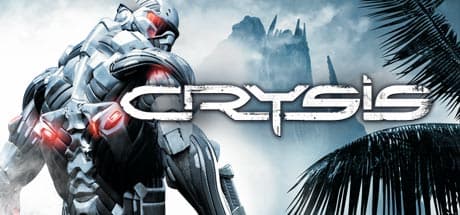
"Crysis: Adapt to Survive in a Changing World" covers Crytek's single-player first-person shooter, published by Electronic Arts. Crysis begins as a military operation across wide jungle battlefields and gradually shifts toward an alien threat.
Its defining idea is adaptation: the player changes Nanosuit functions, weapons, and routes instead of relying on one fixed solution.
Game Overview
The basic loop is to survey a combat area, choose an approach, and complete the objective while dealing with hostile forces. A direct firefight is only one option.
You can use vegetation and cover to close the distance, avoid patrols, attack from range, or use vehicles to cross exposed ground quickly.
The early encounters establish reconnaissance, infiltration, sniping, and aggressive assaults against human soldiers. As the campaign develops, both the environment and the nature of the opposition change.
Tactics that worked reliably in the jungle may become less effective, reinforcing the game's central theme of adapting under pressure.
How the Nanosuit Changes Combat
The Nanosuit supports rapid movement, enhanced physical force, stronger protection, and optical camouflage. Cloaking can help you leave an enemy's line of sight, reposition, and begin an attack from another direction.
Armor can make a dangerous crossing more manageable, while mobility helps create flanking opportunities.
These powers are resources rather than permanent advantages. Timing and recovery matter, so camouflage does not simply remove every obstacle.
The strongest approach is usually to use a suit function to gain positional advantage, then combine it with the right weapon, cover, and escape route.
Weapons can also be adapted to the situation. Long-range fire can reduce the number of enemies before an assault, while close-range equipment supports faster and riskier attacks.
Alien technology appears later, but success still depends on reading enemy movement and selecting tools that fit the encounter rather than treating special weapons as automatic solutions.
Freedom and Replay Value
Crysis is not best understood as a world in which every destination can be visited in any order. Its freedom comes from giving individual combat spaces several plausible solutions.
You may follow the coast, move through dense vegetation, scout from higher ground, or use a vehicle to trade subtlety for speed.
This structure rewards experimentation after failure. If a frontal attack collapses, changing the route or opening with camouflage may produce a very different encounter.
The game is particularly satisfying when treated as a tactical sandbox rather than a corridor shooter with a single intended sequence.
Its stealth is less rigid than that of a dedicated stealth game. Detection can turn an infiltration into open combat, and the Nanosuit often gives you a chance to recover.
Players who enjoy improvisation may see this as a strength, while those seeking perfectly predictable stealth rules or tightly standardized encounters may find it uneven.
PC Requirements and Practical Expectations
The listed minimum requirements target Windows XP or Windows Vista. They specify a 2.8GHz processor for XP or a 3.2GHz processor for Vista, 1.0GB RAM on XP or 1.5GB on Vista, a GPU with 256MB, 12GB of storage, and DirectX 9.0c.
Video-memory capacity alone does not describe GPU performance, so the 256MB figure should not be used as the sole compatibility test.
The recommended configuration lists an Intel Core 2 Duo at 2.2GHz or AMD Athlon 64 X2 4400+, 2.0GB RAM, and an NVIDIA GeForce 8800 GTS/640 or similar GPU.
These are old components by current standards, but newer hardware does not guarantee flawless behavior with an older game. Modern Windows compatibility, drivers, display resolution, and available fixes may matter as much as raw processing power.
When checking performance, test demanding outdoor battles rather than judging the game only by menus or quiet interiors. Higher resolutions and visual settings can increase the load.
If performance is unstable, reducing shadows, anti-aliasing, and overall rendering quality one step at a time makes it easier to identify the costly setting.
Reception and Review Pattern
Crysis has maintained a broadly positive reputation over time. The strongest reason to revisit it is the combination of Nanosuit abilities and battlefields that support several approaches.
It still offers a campaign built around experimentation, which distinguishes it from shooters focused mainly on scripted forward movement.
There are also limitations tied to its age. Controls, enemy behavior, and convenience on modern operating systems may not feel like those of a current release.
Before buying, check the latest user feedback and confirm that players with a similar system are not reporting unresolved launch or display problems.
Who Should Play It
Crysis suits players who enjoy repeating an encounter with different methods, such as infiltration, sniping, flanking, or direct assault. It is also a strong fit for anyone who wants science-fiction equipment to affect moment-to-moment decisions instead of serving only as decoration.
Observing terrain and enemy placement is more rewarding here than simply following objective markers.
It may also interest players exploring important PC shooters that were widely associated with hardware performance. That historical reputation is only part of the appeal, however.
The more lasting achievement is the way the Nanosuit and broad combat spaces support player-authored tactics.
Limitations and Who Should Skip It
This is not the best choice for players primarily seeking competitive or cooperative play. The supplied game information identifies it as a single-player title, so it should not be approached as a live-service shooter with a continuing online population.
Players wanting short competitive matches should consider a multiplayer-focused game instead.
The listed languages are English, French, German, Spanish, Italian, Czech, Polish, Russian, and Hungarian. Japanese is not included in the provided language data.
Players who require Japanese text or audio should verify the current store listing before purchase, and everyone using a modern PC should check current compatibility information because the official requirements were written for Windows XP and Vista.