Overview
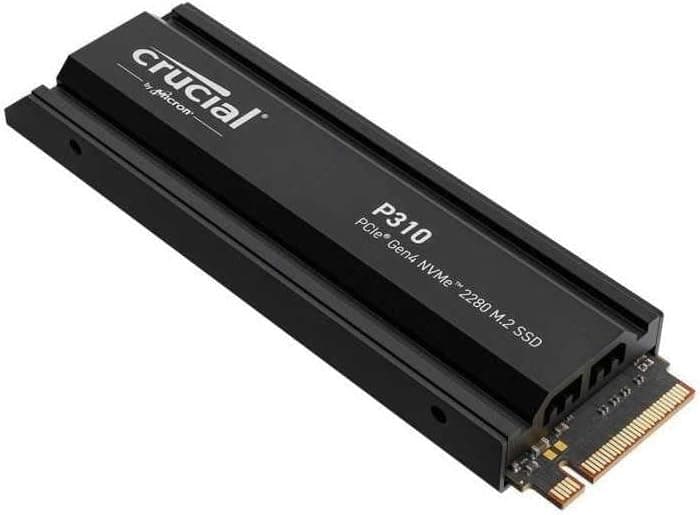
Crucial, the consumer brand of Micron, has established a strong reputation for reliable and affordable storage solutions. The P310 series is their latest line of NVMe SSDs, and the 4TB model, CT4000P310SSD8-JP, is the focus of this review. It leverages the PCIe Gen4 interface to deliver sequential read speeds of up to 7,100MB/s, making it a compelling option for gamers and content creators who need fast access to large files.
This drive is designed with gamers in mind, offering roughly twice the performance of a Gen3 SSD. This translates to quicker game loads, smoother texture streaming in open-world titles, and reduced stutter when moving between areas. Beyond gaming, the high throughput is beneficial for video editing, 3D rendering, and other creative workloads where large files are the norm.
In the current market, the P310 4TB sits in the entry-to-mid tier of Gen4 SSDs. Its key selling point is the combination of a massive 4TB capacity with a relatively accessible price point, making it an attractive choice for users who want to expand their storage without breaking the bank.
Compatibility Guide
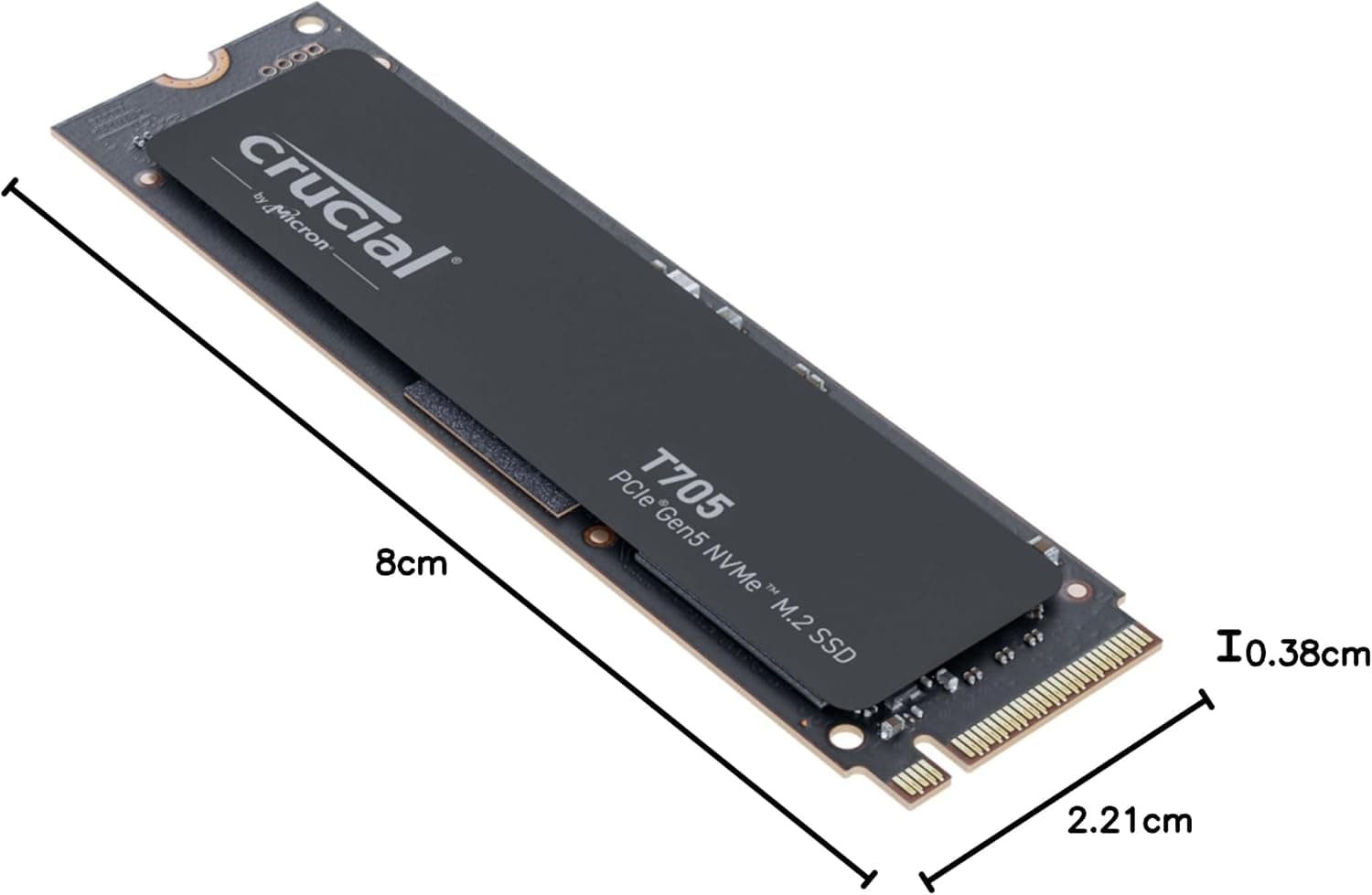
The Crucial P310 4TB uses the M.2 2230 form factor, which is shorter than the standard M.2 2280 size. This is a critical consideration for compatibility. While many laptops and some mini PCs have M.2 2230 slots, most desktop motherboards are designed for M.2 2280 drives. You will need to check your motherboard's specifications to see if it supports M.2 2230, or if you'll need a mounting adapter to fit it into a 2280 slot.
The interface is PCIe 4.0 x4. It is backward compatible with PCIe 3.0 slots, but you will be limited to PCIe 3.0 speeds (around 3,500MB/s). To achieve the full 7,100MB/s read speed, you'll need a motherboard and CPU that support PCIe 4.0. Additionally, this drive is DRAM-less and relies on Host Memory Buffer (HMB) technology, so ensure your system supports HMB for optimal performance.
For use as a boot drive, your system's UEFI must be set to boot from NVMe. Also, given the 4TB capacity, you'll need to use the GPT partitioning scheme to address the full space.
Product Info
The Crucial P310 4TB was released in July 2024, making it a relatively recent addition to the market. The reference price in Japan is 91,980 yen (tax included), and it's sold as a domestic authorized product. Crucial typically provides a limited warranty on their SSDs, so you can expect a standard coverage period.
Key performance figures include sequential read speeds up to 7,100MB/s and write speeds up to 6,000MB/s. It uses Micron's 232-layer QLC NAND flash and is powered by the Phison E27T controller. The DRAM-less design is compensated by HMB, which uses a portion of the host's system memory as a cache.
In terms of market positioning, this drive is aimed at the entry-to-mid tier of Gen4 SSDs. It offers a large capacity at a competitive price, but the use of QLC NAND means lower write endurance compared to TLC-based drives. For typical gaming and general use, this is not a concern, but it's something to keep in mind for heavy write workloads.
Best Use Cases
- Gamers: If you have a large library of games and want to reduce load times, this drive is an excellent choice. The high read speeds will make a noticeable difference in game boot times and level transitions. However, if you frequently write large amounts of data (e.g., recording gameplay), a TLC drive might be more suitable.
- Content Creators: Video editors and photographers who work with large files will benefit from the fast read and write speeds. This drive can handle 4K video editing and RAW photo processing with ease. But for constant, heavy write workloads like rendering long 8K videos, consider the lower endurance of QLC NAND.
- Budget-Conscious Storage Seekers: If you need a massive 4TB drive without spending a fortune, this is a great option. It's perfect for storing games, media, and backups.
On the other hand, this drive may not be ideal for: - Users who prioritize write endurance: QLC NAND has a lower TBW rating than TLC. If you're running a server or have workloads that constantly write data, look for a TLC-based drive.
- Users who need M.2 2280 size: If your motherboard only supports M.2 2280, you'll need to find a different drive or use an adapter.
Things to Consider
First and foremost, the M.2 2230 form factor is a potential deal-breaker for many desktop users. Most motherboards have M.2 2280 slots, so you'll need to verify compatibility or use a mounting adapter. This is a crucial step before purchasing.
Second, the QLC NAND means lower write endurance compared to TLC drives. While fine for gaming and general use, it's not ideal for heavy write workloads. Check the TBW rating in the official specs to see if it meets your needs.
Third, the DRAM-less design relies on HMB. If your system doesn't support HMB, you may expe
Product Disclosure (Amazon)
- Manufacturer: Crucial(クルーシャル)
- ASIN: B0FH5TB96N
- Note: This article covers a manufacturer-made product based on Amazon listing details.