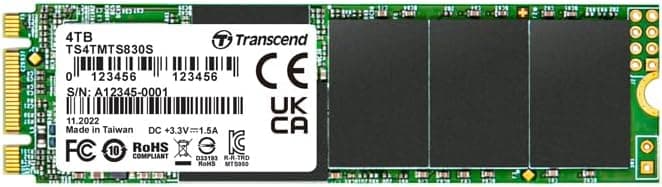
This article covers Transcend MTS830S 4 TB M.2 2280 SATA III 6 Gb.
Overview
The Transcend MTS830S is an M.2 2280 SATA III internal SSD offering a massive 4TB capacity. It uses 3D TLC NAND flash and includes a DRAM cache for consistent performance. While it doesn't match NVMe speeds, this drive is a solid mid-range choice for users who need large amounts of reliable storage without breaking the bank.
Compatibility Guide
The MTS830S uses the M.2 2280 form factor and the SATA III (6Gbps) interface. It fits into any M.2 slot that supports SATA protocol – note that some motherboard M.2 slots are NVMe-only, so check your motherboard specs. It can be used in desktop PCs, some laptops with M.2 slots, and even in consoles (though PS5 requires NVMe). No extra cables are needed; the drive slots directly into the M.2 socket.
Product Info
This SSD is positioned as a mid-range, large-capacity option from Transcend. The 4TB model is the highest capacity in the MTS830S line. With DRAM cache, random read/write performance is improved over DRAM-less SATA SSDs, making it suitable for everyday computing and storage tasks. Warranty is typically 3 years (please verify on official page).
Best Use Cases
Data hoarders and media libraries: If you store large collections of photos, videos, or backups, the 4TB capacity provides ample space at a reasonable cost per gigabyte. Older machines or laptops with M.2 slots: Upgrade an aging laptop or small-form-factor PC that lacks 2.5-inch bays but has an M.2 slot supporting SATA. * Secondary game storage: While load times are longer than NVMe, the generous capacity and DRAM cache make it a good choice for storing your game library, especially if you have a separate fast drive for active titles. ## Alternatives
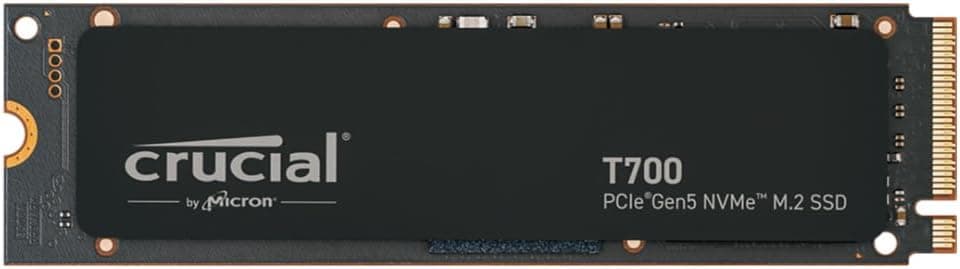
In a similar price range, you'll find the Samsung 870 EVO (2.5-inch) and Crucial MX500 (2.5-inch). Both are well-regarded 2.5-inch SATA SSDs with DRAM cache. The MTS830S differentiates itself with the M.2 form factor, which saves space and simplifies installation in compact builds. However, if you have a free 2.5-inch bay and prefer a more established brand, those alternatives might be worth considering.
Things to Consider
The primary limitation is speed: SATA III caps sequential read/write at around 560 MB/s, which is far slower than NVMe SSDs. This drive is not ideal for heavy video editing or large-file transfers that would benefit from faster throughput. Also, verify that your system's M.2 slot supports SATA mode – some newer boards only support NVMe on M.2 slots. Additionally, the 4TB capacity means you should plan for data migration and backup carefully, as a full drive failure would result in significant data loss.
Product Disclosure (Amazon)
- Manufacturer: トランセンドジャパン
- ASIN: B0BPYP2PRF
- Note: This article covers a manufacturer-made product based on Amazon listing details.