Game Overview
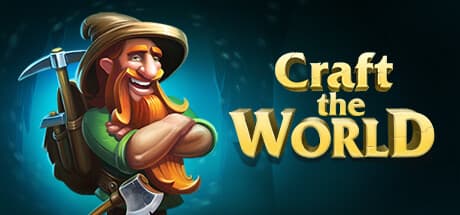
Craft The World is a sandbox colony simulation about assigning jobs to dwarves and turning gathered resources into a functioning underground fortress. Released on November 24, 2014, it connects mining and crafting with settlement management, exploration, and defense.
The basic loop is easy to understand: explore the generated world, collect materials, make tools and furniture, then expand into new areas. Dwarves perform assigned work on their own, but poor routes and missing platforms can delay an entire project.
Deciding where to dig is therefore as important as deciding what to build.
How Mining, Building, and Daily Needs Connect
Digging without a plan creates long travel routes between resources, storage, and workshops. Ladders, platforms, and compact work areas can improve productivity more than an early piece of advanced equipment.
Although the game looks like a mining sandbox, much of its strategy comes from designing practical routes.
Materials feed the crafting system, while completed equipment opens safer or more efficient ways to explore. Food, clothing, and sleeping arrangements also matter, so equipping a few fighters does not solve every settlement problem.
Exploration, production, construction, and defense form a connected cycle, making priorities central to successful play.
Combat and Magical Intervention
Dangerous creatures inhabit the surface and underground areas, and dwarves rely on the equipment and defenses prepared for them. Rather than manually controlling every attack, the player establishes production, equips the group, shapes the terrain, and provides magical support when needed.
Waiting until an attack begins to prepare weapons can leave the colony exposed.
Magic can also help with work and movement away from the main base. It is most useful as an intervention tool during emergencies or expeditions, not as a permanent substitute for sensible routes.
The distinctive rhythm comes from observing autonomous workers and stepping in when a local problem threatens the larger plan.
Early-Game Priorities
At the beginning, establish food, sleeping space, and basic tools before expanding in several directions. A visible resource is not always worth pursuing immediately if reaching it requires an awkward or unsafe route.
When work stops, check accessibility and job congestion as well as the material requirements.
Crafting every available item can drain supplies without solving the colony's current weakness. Consider whether each new object improves mining, defense, or living conditions, then build around the most immediate bottleneck.
This makes the recipe progression easier to read and gives each expedition a clear purpose.
System Requirements
The listed minimum configuration is Windows Vista or later, a 2.0 GHz dual-core CPU, 4 GB RAM, Intel Graphics, DirectX 9.0, and 2 GB of available storage.
The small storage requirement and lack of a dedicated GPU in the minimum listing make Craft The World approachable for older Windows systems and some integrated-graphics PCs.
These are minimum requirements, however, and they do not guarantee ideal performance in a large settlement with many simultaneous jobs. Integrated graphics may share system memory, so closing memory-heavy background applications can help on a 4 GB machine.
No recommended specification was supplied, so compare the current store requirements with your exact hardware before buying.
Multiplayer and Languages
The game supports single-player, multiplayer, and online co-op. This allows either careful solo planning or shared work with other players, but the core activity remains the gradual accumulation of resources, equipment, and infrastructure in every mode.
Supported languages include English, Russian, French, Italian, German, Spanish, Japanese, Korean, Simplified Chinese, Polish, Portuguese, and Turkish. Players who require Japanese localization can therefore consider it, though the current store listing should still be checked for any platform-specific details.
Reception and Common Impressions
Craft The World has maintained a broadly favorable reception over the long term. Its appeal lies in watching mined resources become tools and facilities that enable deeper exploration, as well as observing a busy dwarf settlement develop from a rough shelter into an organized base.
Players seeking side-view digging combined with colony management are likely to appreciate that progression.
Potential frustration comes from indirect control. Dwarves may not choose the route or task order the player expected, especially in a complicated excavation.
The game rewards redesigning paths and removing bottlenecks rather than expecting every order to be executed instantly.
Who Should Play It
It suits players who want gathered resources to support housing, production, and defense instead of crafting being an isolated checklist. It may also appeal to people interested in Dwarf Fortress-style population management who prefer a readable side view, or Terraria-like excavation with a stronger emphasis on labor planning.
The game is also a good fit for players who enjoy cumulative progress. A workshop or route built during one session can make the next expedition safer and faster.
Enjoyment depends largely on whether diagnosing an inefficient colony feels satisfying rather than tedious.
Caveats and Who Should Skip It
Players seeking constant direct-action combat or precise control of every worker may find the autonomous behavior frustrating. Some projects take time to begin when routes are complicated or several jobs compete for attention.
Accepting broad orders and occasional intervention is essential to enjoying the design.
Unplanned expansion can also produce long routes and a settlement that takes considerable effort to reorganize. Anyone uninterested in managing storage, food, access, and defense may find the repeated gathering cycle monotonous.
If online co-op is the main reason for buying, verify current player and connection details on the store before committing.