Overview
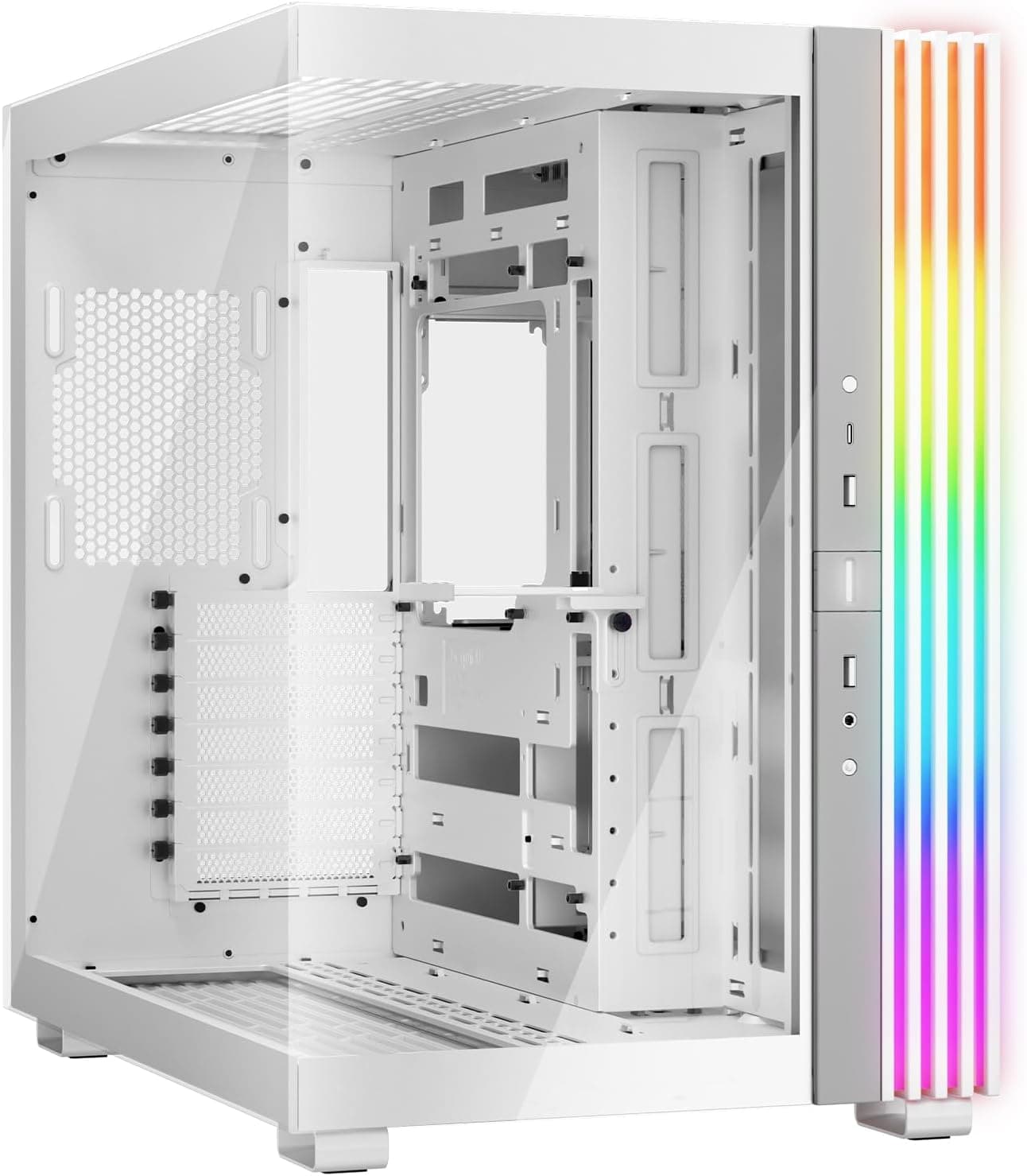
The be quiet! Light Base 600 DX ホワイト PCケース (Light Base 600 DX White) is a mid-tower from the German brand be quiet!, and the fastest way to understand it is this: it is a display case, not a silence case.
A pillar-less frame, two tempered glass panels and a 270-degree ARGB strip all point the same direction — showing the build off. be quiet!
built its reputation on quiet components, so buyers often expect acoustic isolation here; glass does not provide that. Understand the trade and it is a strong value at its price.
It supports ATX, Micro-ATX and Mini-ITX boards. Construction is tempered glass and alloy steel, with a weight of about 6 kg — light for a mid-tower with two glass panels.
Amazon.co.jp shows 175 reviews at 94% positive (4.7 out of 5, captured 2026-05-28), so the fundamentals are clearly well received.
The "DX" suffix marks the variant that ships with a hub controlling up to 12 fans plus ARGB.
Three Layouts and How to Choose
The core value here is the ability to swap the feet and run the case in normal, inverted, or horizontal orientation. That is not just a styling trick — it gives you an escape route when your desk dictates the placement.
| Layout | Best for | Watch out for |
|---|---|---|
| Normal | Standard placement beside or under a desk; airflow assumptions stay conventional | Decide placement so the glass faces you |
| Inverted | Turning the glass toward the user; the GPU sits high, so sag is less visible | Heat paths and cable routing change once top and bottom swap |
| Horizontal | Low shelves, or tucking the case under a monitor on the desk | Glass faces up and collects dust; largest desk footprint |
In the inverted layout the GPU sits above the motherboard, which hides sag well. Horizontal is the gentlest on a heavy card because gravity now pulls perpendicular to the board.
The cost of horizontal is cleaning frequency and desk space. Almost nobody actually uses all three, so pick your orientation before buying and plan cable lengths and clearances for that one.
Compatibility Guide
The case accepts ATX (305×244 mm), Micro-ATX (244×244 mm) and Mini-ITX (170×170 mm) boards. Because it is sized for full ATX, a smaller board leaves usable empty space for cabling and extra fans.
The PSU mounts at the rear. Since that differs from the usual bottom-chamber position, cable reach matters more than normal — particularly the 24-pin and the EPS 12V lead, which has to travel to the top edge of the board.
Stock cables on generic PSUs can end up marginal. ATX units are typically 140–160 mm deep and high-wattage models can be longer, so measure the PSU you already own before committing.
Maximum GPU length and CPU cooler height are not present in the data behind this article. Rather than guess, check the official spec sheet — if you plan on a triple-fan card or a tall air cooler, those are the two numbers to verify before ordering.
A VGA holder is included, so no separate support bracket is needed for a heavy card.
Cutouts for rear-connector motherboards are provided, keeping cables out of sight. Those designs differ between vendors, so match your exact board model against the case's compatibility list rather than assuming.
Mesh filters are supplied for three surfaces, so basic dust protection is covered out of the box.
Cooling and Fan Planning
The hub controls up to 12 fans. The easy mistake is reading that as "12 mounting positions" — hub capacity and physical mounts are separate things, and per-panel fan counts and radiator support are not included in the data here.
If a 360 mm AIO is part of the plan, confirm that single point on the official spec sheet first.
With a pillar-less shell and two glass panels, intake has to come from the non-glass surfaces — bottom and side mesh. As a general rule, pulling air in low and exhausting up and out the rear, with slight positive pressure, keeps dust down.
Fans are not on the accessory list, so budget for roughly three intakes plus one exhaust, and confirm the actual box contents on the packaging. Match the hub's 5V 3-pin ARGB standard; 12V 4-pin RGB fans do not belong here.
Product Info
The be quiet! Light Base 600 DX ホワイト PCケース was listed at ¥22,236 on Amazon.co.jp as of 2026-05-29.
Case pricing moves often and drops during sales, so check the product page for the current figure. The eBay reference returned no numeric price ("See listing"), so overseas pricing needs to be checked case by case.
| Item | Value |
|---|---|
| Model | be quiet! Light Base 600 DX White |
| Motherboard support | ATX / Micro-ATX / Mini-ITX |
| Material | Tempered glass, alloy steel |
| Weight | 6 kg |
| Color | White |
| Fan control | Hub for up to 12 fans + ARGB |
| Layout modes | Normal / inverted / horizontal |
| LED strip | 270° ARGB |
| Included | VGA holder, mesh filters (3 surfaces) |
| PSU mount | Rear |
The 6 kg figure matters more than it looks. It is light for a dual-glass mid-tower, which suits a case you are meant to pick up and reorient.
Once populated with a PSU, GPU and cooler, of course, the real handling weight is well over double that. With 175 reviews averaging 94% positive, the sample is large enough to suggest no widespread complaints about basic build quality.
How It Compares
At this price you are really choosing between three directions.
- Other pillar-less showcases: something like the MSI MAG PANO 110R PZ, worth comparing if you want clearly published clearance figures.
- Multi-panel glass towers: the Thermaltake The Tower 600 class, which shows more but demands more height and floor area.
- Airflow-first builds: mesh-front designs such as the NZXT H5 Flow, if temperatures outrank looks.
The Light Base 600 DX is the only one of these you can reorient after the build. If you never intend to change orientation, you are paying for a feature you won't use, and rivals may offer clearer clearance specs or broader radiator support.
Best Use Cases
It fits enthusiasts who treat building itself as the hobby: the three layouts give you something new every time the desk gets rearranged. It also fits ARGB-focused gaming builds, since one hub handles up to 12 fans and the lighting, cutting cable count and software complexity.
The 270-degree strip is designed so the lighting still reads correctly when the case is inverted or laid flat, avoiding the "bright in the wrong place" look. Finally, it suits anyone building a white-themed desk — white cases with two glass panels are a short list.
It does not suit anyone whose first priority is silence.
Things to Consider
Fans are not on the accessory list. Only the VGA holder and three mesh filters are specified.
The ARGB hub is included, the fans are not. Three intakes plus one exhaust adds a real cost on top of the ¥22,236 captured on 2026-05-29, so do not treat that as a finished-build price.
Confirm box contents on the packaging as well.
Do not expect silence from the brand name. be quiet!'s acoustic reputation rests mainly on its Silent Base cases, fans and PSUs.
A pillar-less shell with two glass panels transmits noise by construction. If quiet is the top requirement, look at the company's damped, closed-panel line instead.
Radiator and clearance figures are missing from this data. Per-panel fan counts, radiator sizes, maximum GPU length and cooler height are all absent.
Verify them officially before ordering a large AIO or a triple-fan card — "it'll probably fit" is how builds stall halfway.
Commit to the white theme fully. In a white case, black PSU cables and a black GPU PCB stand out badly, and with two glass panels everything is visible.
Budget for white sleeved extensions and white fans from the start, or the result looks half-finished.
Horizontal placement has costs. Glass facing up shows every speck of dust, and a mid-tower laid flat occupies the maximum desk area.
If it is going under a monitor, measure the stand height first.
Do not trust listing metadata blindly. Cases often share one product page across variants (DX and non-DX, white and black), so model numbers or manufacturer fields on the page may describe a different version.
Confirm against the product images and title before ordering.
FAQ
Q. How many fans are included? A.
The accessory list names only the VGA holder and three mesh filters — no fans. Plan to buy them separately.
The hub itself supports up to 12.
Q. Will a 360 mm radiator fit? A.
Radiator support is not stated in this data, so check the official spec sheet. Also note that inverting or laying the case flat changes which panel is on top, which affects pump-versus-radiator height.
Q. How quiet is it? A.
Not as quiet as a damped, closed case. Two glass panels and an open frame are the opposite of acoustic isolation.
If silence leads your list, compare against be quiet!'s enclosed models.
Q. Can it handle a heavy graphics card? A.
Yes — a VGA holder is included, the inverted layout hides sag, and horizontal mode changes the load direction entirely. Still confirm maximum card length officially.
Q. Is 6 kg manageable for a solo build? A.
Yes, that is light for the class. Just remove the glass panels before moving or reorienting the chassis; tempered glass does not survive being dropped.
Q. What does it cost? A.
¥22,236 on Amazon.co.jp as of 2026-05-29.
Cases swing hard during sales, so check the product page for the current price.