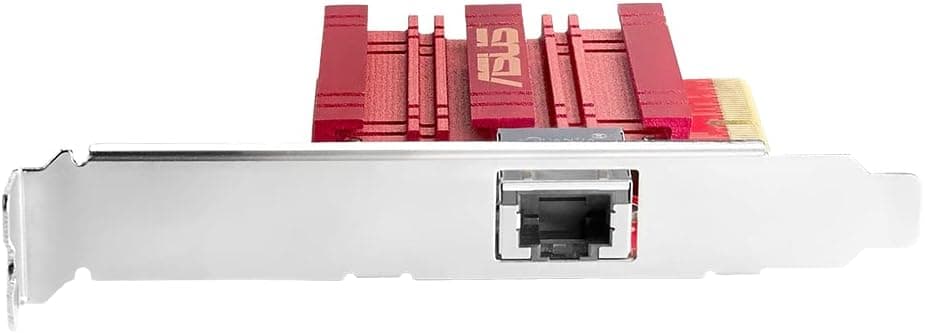
This article covers ASUSTek 超高速通信 10Gbpsネットワークカード 10GBase-T (10G) ネットワークテクノロジー 対応 XG-C100C V2.
Overview
The ASUS XG-C100C V2 is a PCIe network card that brings 10Gbps wired connectivity to your desktop without breaking the bank. Powered by the Marvell AQC113CS controller, it supports 10GBase-T as well as 5G, 2.5G, 1G, and 100Mbps speeds, making it a versatile upgrade for anyone moving beyond gigabit Ethernet. Using a standard RJ45 port, the card works with existing Cat 6a (or better) LAN cables, eliminating the need for expensive fiber transceivers. Built-in QoS technology automatically prioritizes gaming packets, reducing latency for online multiplayer and real-time applications.
Connectivity & Compatibility
The XG-C100C V2 connects via a PCIe 3.0 x4 slot. It is compatible with Windows 10/8.1/8 and Linux kernels 4.4/4.2/3.6/3.2, covering most modern desktop and server operating systems. Supported standards: IEEE 802.3an (10GBase-T), 802.3bz (5G/2.5GBase-T), 802.3ab (1000Base-T), 802.3u (100Base-TX) Additional protocols: IEEE 802.1p QoS, IEEE 802.1q VLAN tagging * Operating temperature: 0°C to 40°C; storage: -40°C to 60°C To achieve full 10Gbps throughput, you'll need a compatible switch or router with 10GBase-T ports and Cat 6a or Cat 7 cabling. Also ensure your motherboard has a free PCIe x4 (or wider) slot.
Product Info
Released as a revision of the original XG-C100C, the V2 model launched around 2021. It sits in the mid-to-high-end segment of the consumer 10G NIC market, with a street price typically between ¥8,000 and ¥10,000 (approximately $55–$75 USD). Warranty: Standard manufacturer warranty (usually 3 years) Accessories: Low-profile bracket, quick start guide * Availability: , major electronics retailers, and PC component stores Competitors include the TP-Link TX401 and QNAP QXG-10G1T, but the ASUS card stands out with its integrated QoS and broad OS support.
Best Use Cases
NAS and file server users: If you frequently transfer large files (e.g., video projects, backups), upgrading to 10Gbps eliminates the gigabit bottleneck. Ensure your NAS also has a 10G interface for full benefit. Content creators and video editors: Working with 4K/8K raw footage over a network becomes much faster with 10G. The QoS feature helps maintain stable throughput for editing software traffic. * Gamers: While gaming itself doesn't require 10Gbps, the QoS prioritization can reduce lag during peak network usage. The real benefit comes from faster game downloads and updates. For users who only browse the web or stream video, this card is overkill. Stick with gigabit unless you have a specific need for higher bandwidth.
Product Disclosure (Amazon)
- Manufacturer: ASUS
- ASIN: B09Q546Y7N
- Note: This article covers a manufacturer-made product based on Amazon listing details.