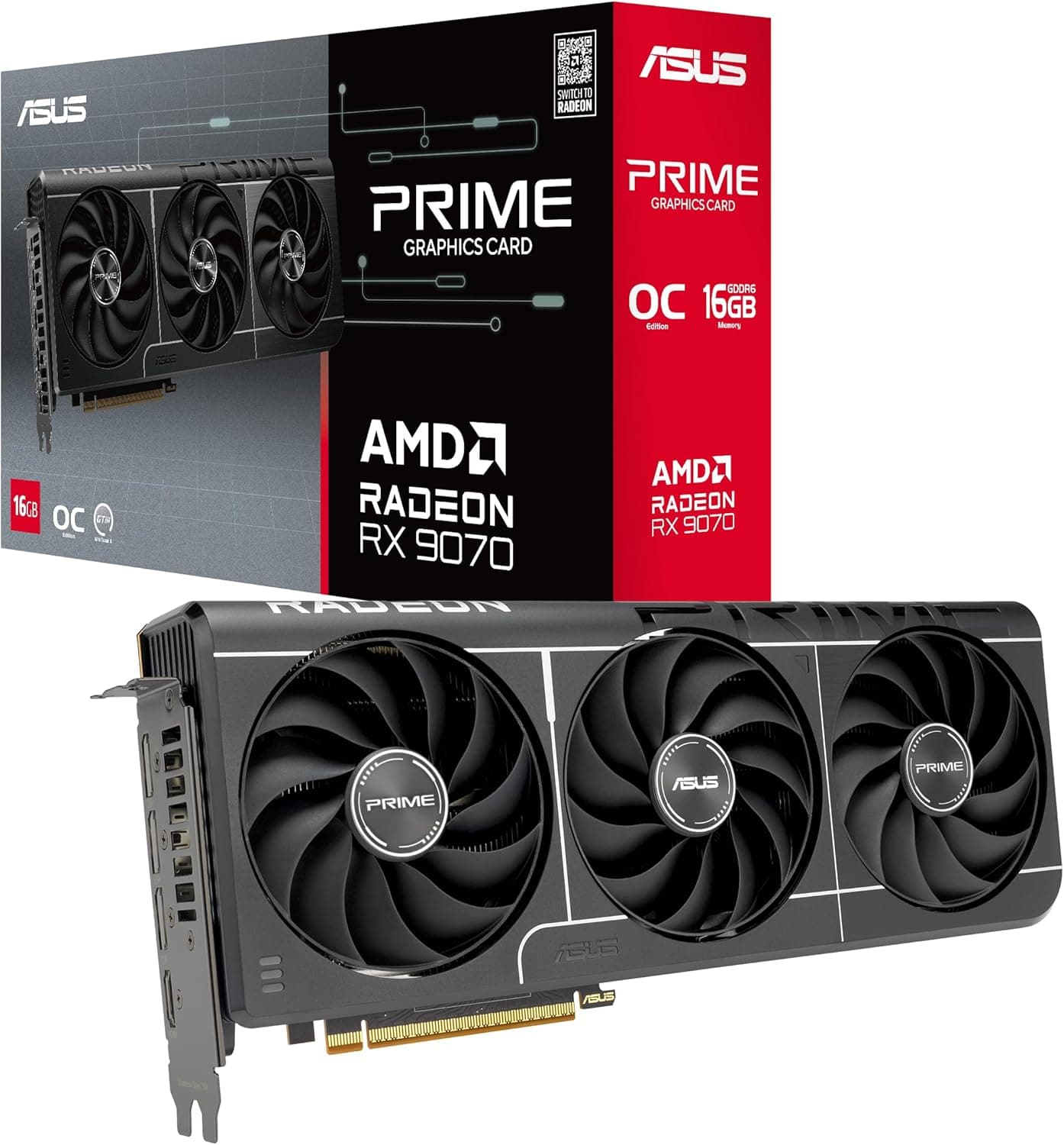
This article covers ASUS Prime Radeon RX 9070 EVO ビデオカード OC EDITION 16G GDDR6 PRIME-RX9070-O16G-EVO 国内正規代理店品.
Overview
The ASUS Prime Radeon RX 9070 EVO is a mid-high range graphics card powered by the AMD Radeon RX 9070 GPU. It features 16GB of GDDR6 memory and PCI Express 5.0 support, offering ample performance for modern gaming and creative workloads. As an OC Edition, it comes with a factory boost clock of 2610 MHz, higher than the reference model. The card measures 304×126×50mm and occupies 2.5 slots, making it relatively compact for its class. Cooling is handled by Axial-tech fans with dual ball bearings, a phase-change GPU thermal pad, and a ventilated backplate. The 0dB technology stops the fans when the GPU temperature drops below 50°C, enabling silent operation during light tasks. The Prime series focuses on reliability and affordability, positioning this card as a strong contender in the mid-high segment.
Compatibility Guide
Interface: PCI Express 5.0 x16 (backward compatible with PCIe 4.0 and 3.0). Form factor: 2.5 slot, 304mm length. Ensure your case supports at least 310mm GPU clearance. Power requirements: Standard 8-pin x2 (typical). Recommended PSU: 650W or higher. Outputs: 1x HDMI 2.1b, 3x DisplayPort 2.1a, supporting up to four displays at 7680×4320. * Memory: 16GB GDDR6, 256-bit bus, 20 Gbps effective speed.
Product Info
The ASUS Prime Radeon RX 9070 EVO launched in late 2025 as a mid-high tier GPU. It competes directly with the NVIDIA RTX 4070 Super, offering 16GB VRAM (vs 12GB) and PCIe 5.0. With 3584 stream processors and a peak boost of 2610 MHz, it delivers around 35 TFLOPS FP32 performance. The TDP is estimated at 260W. ASUS provides a 3-year warranty for officially distributed units in Japan.
Best Use Cases
1440p high-refresh gaming: This card handles 1440p at 144 fps in most titles, making it ideal for competitive and story-driven games. For 4K, consider stepping up to a higher-tier model. Silent PC enthusiasts: The 0dB fan stop and low noise under load make it perfect for quiet builds. The lack of RGB also appeals to minimalists. Small form factor builds: At 304mm and 2.5 slots, it fits many compact cases, but airflow must be managed carefully. Value-conscious buyers: Compared to NVIDIA alternatives, it offers better VRAM and PCIe revision for a competitive price, future-proofing your investment. ## Alternatives
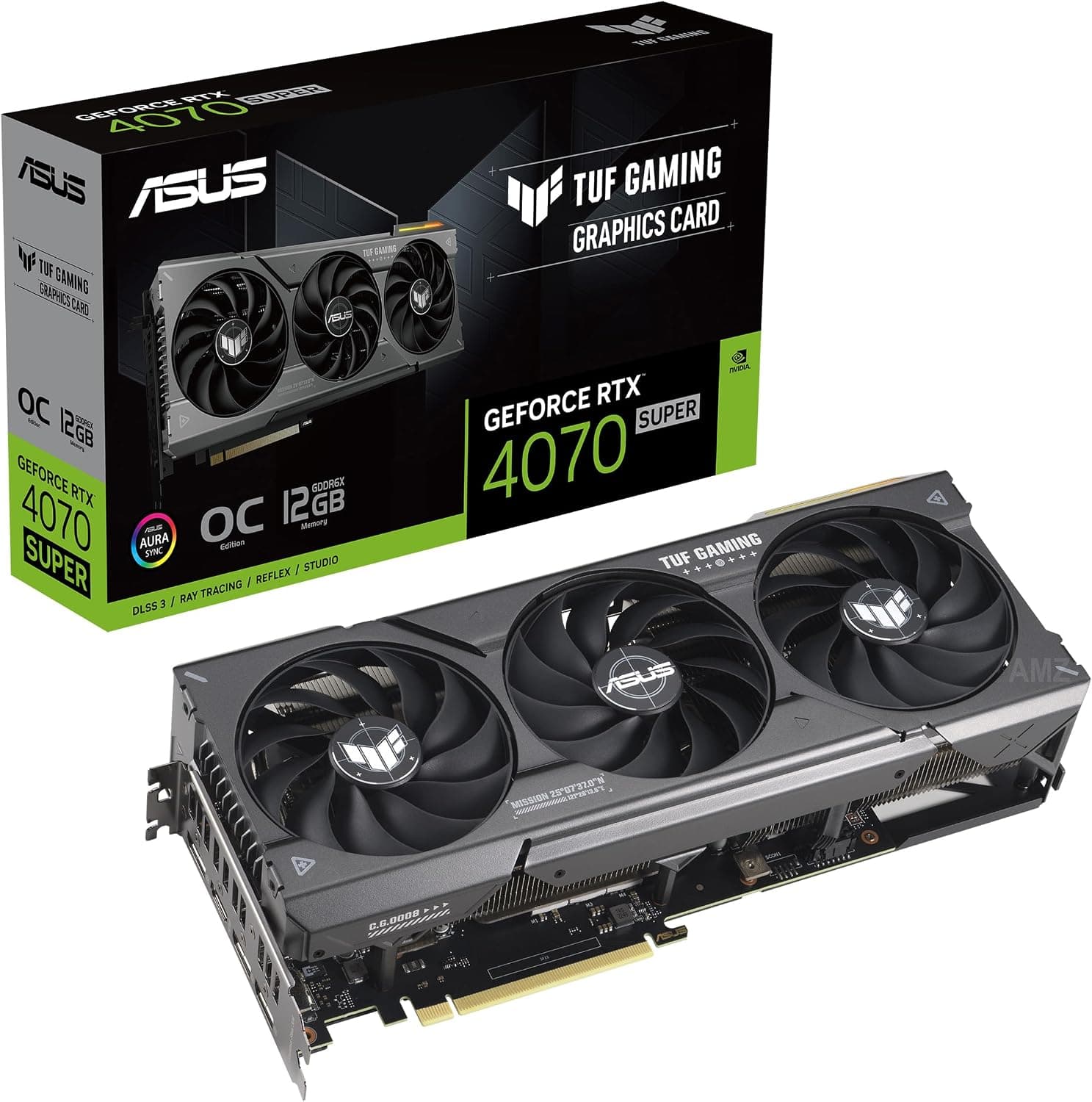
NVIDIA GeForce RTX 4070 Super: Similar price but with 12GB VRAM. RX 9070 wins on VRAM and PCIe 5.0, but loses in ray tracing efficiency. AMD Radeon RX 7800 XT: Previous generation, cheaper but less efficient. RX 9070 has newer architecture and lower power draw. * ASUS TUF Gaming RX 9070: More robust cooling and RGB, but higher price. Prime is better for budget-conscious users.
Things to Consider
This card is excellent for 1440p gaming but overkill for 1080p light titles. At launch, prices may be inflated due to demand—monitor the market before buying. The Prime series omits RGB lighting, which could be a con for some. Overclocking headroom is limited compared to ROG Strix variants. Also, if you plan to use ray tracing extensively, NVIDIA cards may offer better performance despite lower VRAM. ## FAQ Q: Is this card good for 4K gaming? A: It can handle 4K at medium settings with 60+ fps, but for ultra settings, a higher-tier GPU like the RTX 4080 is recommended. It truly shines at 1440p. Q: What power supply do I need? A: AMD recommends a 700W PSU, but a quality 650W unit will work for most systems. For high-end CPUs, go with 750W or higher. Q: How does the Prime compare to ASUS TUF Gaming? A: Prime is more affordable and simpler in design (no RGB). TUF has better cooling and durability but costs more. Choose Prime for value, TUF for extreme conditions.