.
Overview
The GPU chip is the NVIDIA GeForce RTX 5060, paired with 8GB of GDDR7 memory. As an OC Edition, it ships with a factory overclock that pushes boost clocks to 2595MHz in OC mode and 2565MHz in default mode.
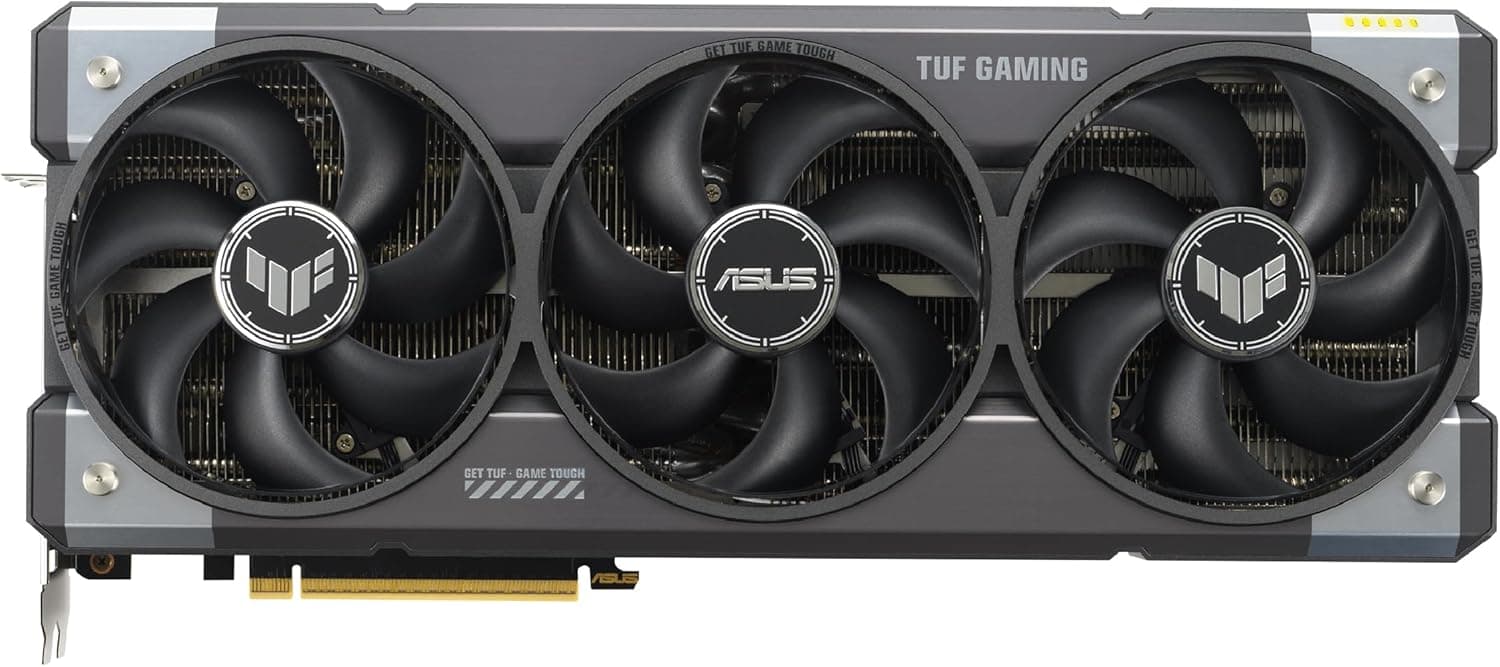
This card adopts an SFF-ready 2.5-slot design, making it a solid fit for compact cases and space-conscious builds. Cooling is handled by a triple Axial-tech fan setup with dual ball bearings for long-term durability.
Positioned in the entry-to-mid tier, this card targets smooth Full HD gaming with enough headroom for WQHD. It also brings modern NVIDIA features like DLSS 4 and 630 AI TOPS of AI performance, which makes it interesting for AI-assisted workloads. PCIe 5.0 support, DisplayPort 2.1b, and HDMI 2.1b outputs round out the connectivity for current displays.
Compatibility Guide
This graphics card uses a PCIe 5.0 x16 interface.
Check the power connector type on your existing PSU before buying to make sure it matches.
The card is 2.5 slots thick, so verify the expansion slot count and clearance in your case. Even though it is SFF-ready, compact cases still need a physical check of card length and slot thickness. The triple-fan design also means you should plan for decent airflow inside the chassis.
Product Info
As an OC Edition, it runs at 2595MHz boost in OC mode and 2565MHz in default mode. It carries 8GB of GDDR7 memory and is rated at 630 AI TOPS of AI performance.
In the market, this card sits in the entry-to-mid tier, aimed at smooth Full HD gaming with the ability to push WQHD at high settings. The Prime series from ASUS focuses on balancing cost, performance, and reliability, making it a sensible pick for first-time GPU buyers or mid-range PC upgrades.
The cooling system uses Axial-tech fans with dual ball bearings for durability. The Auto-Extreme manufacturing process and GPU Tweak III software add to the overall quality and tuning flexibility.
Best Use Cases
- Gamers who want to play the latest titles smoothly at Full HD resolution. The RTX 5060's performance and DLSS 4 support should deliver high-quality visuals without breaking a sweat. If you are chasing maximum quality at 4K, a higher-tier card would be a better fit.
- Builders who want high performance in a compact PC case. The SFF-ready 2.5-slot design fits smaller chassis more easily, and the triple-fan setup keeps cooling in check. Just double-check card length and slot thickness against your case before ordering.
- Users who need a graphics card that can also handle AI-related workloads or creative tasks. The 630 AI TOPS of AI performance opens the door to AI processing and GPU-accelerated work. Professionals who need maximum AI throughput should look at higher-end models instead.
Things to Consider
The 8GB GDDR7 memory is fine for most current games, but newer titles or workloads that rely heavily on high-resolution textures could push past that limit.
PSU wattage is a system-level decision. Verify both the wattage and the power connector type on your current unit before purchase.
Competitors in this price range include AMD Radeon options and older NVIDIA models. If you want the latest NVIDIA features like DLSS 4 and AI performance, this card is a strong choice.
FAQ
The bandwidth will be limited, so you may not reach the theoretical maximum performance. In real-world gaming, the difference is often small, but a PCIe 5.0 board is the ideal pairing.
Q: Is 8GB of VRAM enough for WQHD gaming? A: For most titles, 8GB is enough to play at WQHD comfortably.
Product Disclosure (Amazon)
- Manufacturer: ASUS
- ASIN: B0F76KGH6B
- Note: This article covers a manufacturer-made product based on Amazon listing details.