Game Overview
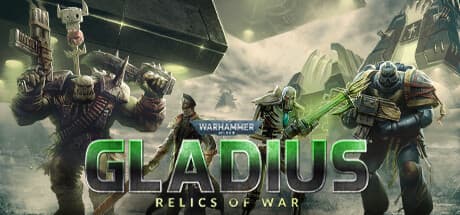
Warhammer 40,000: Gladius - Relics of War: 4X Strategy on a Hostile World is a turn-based 4X game about expanding a faction across Gladius Prime and surviving the wars that follow. Each campaign moves from scouting and resource collection to city construction, research, unit production, and territorial conquest.
Neutral threats can punish careless exploration before rival factions even reach the front line.
Expansion therefore has to match the player's ability to defend new territory. Advancing too quickly can isolate units from reinforcements, while remaining passive gives opponents time to build their economies.
The core challenge is deciding when to develop infrastructure and when to convert resources into military pressure.
A Combat-Focused Form of 4X
The game includes the familiar pillars of exploration, expansion, exploitation, and extermination, but places particular weight on armed conflict. Rather than making negotiation the center of a campaign, it asks players to manage hex terrain, movement, firing range, unit durability, and target priority.
A successful offensive depends on forming a sustainable front, not simply sending every available unit toward the enemy.
Four distinct Warhammer factions are available, with different units, buildings, mechanics, and strategic priorities. Changing factions can alter the value of resources, the preferred research path, and the way an army approaches the map.
This gives repeat campaigns a practical purpose: strategies learned with one faction do not transfer unchanged to every other faction.
Economy, Research, and Army Production
Cities support resource generation, research, and production. Unlocking an advanced unit is of little value if the economy cannot build replacements or support continued deployment.
Players must regularly choose between accelerating research, strengthening infrastructure, and producing forces needed immediately at the front.
Early exploration is safer when units remain close enough to reinforce and recover together. Later, multiple approaches to a city can force a choice between concentrating the main army and retaining a defensive reserve.
A battlefield advantage can disappear when production stalls, so military planning and economic development should be treated as parts of the same problem.
Single-Player and Multiplayer
Single-player matches provide room to learn faction mechanics, research priorities, resource uses, and unit roles against AI opponents. New players benefit from treating an early campaign as a chance to study why units survive or collapse rather than rushing toward victory.
The turn-based format also makes it easier to review positioning mistakes before committing to the next action.
Multiplayer supports online play and local LAN PvP, with both competitive and cooperative options. Human opponents make scouting and the timing of revealed forces more important than they are against predictable AI behavior.
Because a match can become a long commitment, groups should agree on map conditions and expected session length before starting.
System Requirements
The minimum specification lists 64-bit Windows 10, an Intel Core i3 or equivalent processor, and 4GB RAM. The GPU must support Vulkan and provide 3GB VRAM, with the Nvidia GeForce 900 and AMD Radeon RX 400 series given as reference points.
Minimum available storage is 4GB.
The recommended specification raises the processor to an Intel Core i5 or equivalent and memory to 8GB RAM. Its GPU requirement remains Vulkan support with 3GB VRAM, while available storage rises to 8GB.
Owners of older integrated graphics should confirm Vulkan and driver support instead of relying only on the age of the PC.
| Component | Minimum | Recommended |
|---|---|---|
| OS | Windows 10 64-bit | Windows 10 64-bit |
| CPU | Intel Core i3 equivalent | Intel Core i5 equivalent |
| Memory | 4GB RAM | 8GB RAM |
| GPU | Vulkan, 3GB VRAM | Vulkan, 3GB VRAM |
| Storage | 4GB | 8GB |
The storage requirement is modest, but a strategy game with a large map and many active units may become more CPU-intensive as a match develops. The minimum specification is best treated as an entry point.
Players expecting long matches should use the recommended configuration as the more practical baseline.
Player Feedback Trends
Players tend to value the way the game translates distinct Warhammer 40,000 factions into turn-based military systems. Unit progression, ranged support, terrain, and front-line positioning create battles that reward more than raw numbers.
Switching factions also changes economic and research decisions, which supports repeated campaigns.
The same focus can disappoint players looking for diplomacy, trade, or several peaceful victory paths. Newcomers may also need time to understand why an army failed when resource shortages, research choices, and poor positioning combine.
Starting with a smaller map and concentrating on the relationship between production and deployment can make the learning process clearer.
Who Should Play It
Gladius is well suited to Warhammer 40,000 fans who want to command recognizable armies and make deliberate tactical decisions. It also fits players who prefer evaluating information each turn over mastering rapid real-time controls.
Fans of exploration and city growth who want warfare to remain the main route through a campaign should find its priorities appealing.
It works for solo players interested in learning how to defeat AI factions and for groups seeking cooperative or competitive strategy sessions. Players who enjoy revising research orders and army compositions after a failed campaign are likely to gain the most from its faction variety.
Limitations and Who May Not Enjoy It
The listed languages are English, German, Spanish, Russian, Simplified Chinese, and French; Japanese is not listed. English and French include full audio, but much of the important information concerns research, resources, and unit abilities.
Players who cannot comfortably read a supported language should account for that before buying.
Those who prefer diplomacy, trade, narrative choices, or peaceful empire building may find the emphasis on warfare too narrow. Larger matches also increase the number of cities and units requiring attention, making the game less suitable for players who want every session to end quickly.
The game was released on July 12, 2018, so current OS, language, and multiplayer support should be checked on the store page before purchase.