This article covers Sapphire NITRO+ Radeon RX 6800 OC グラフィックスボード 11305-01-20G VD7467.
Overview
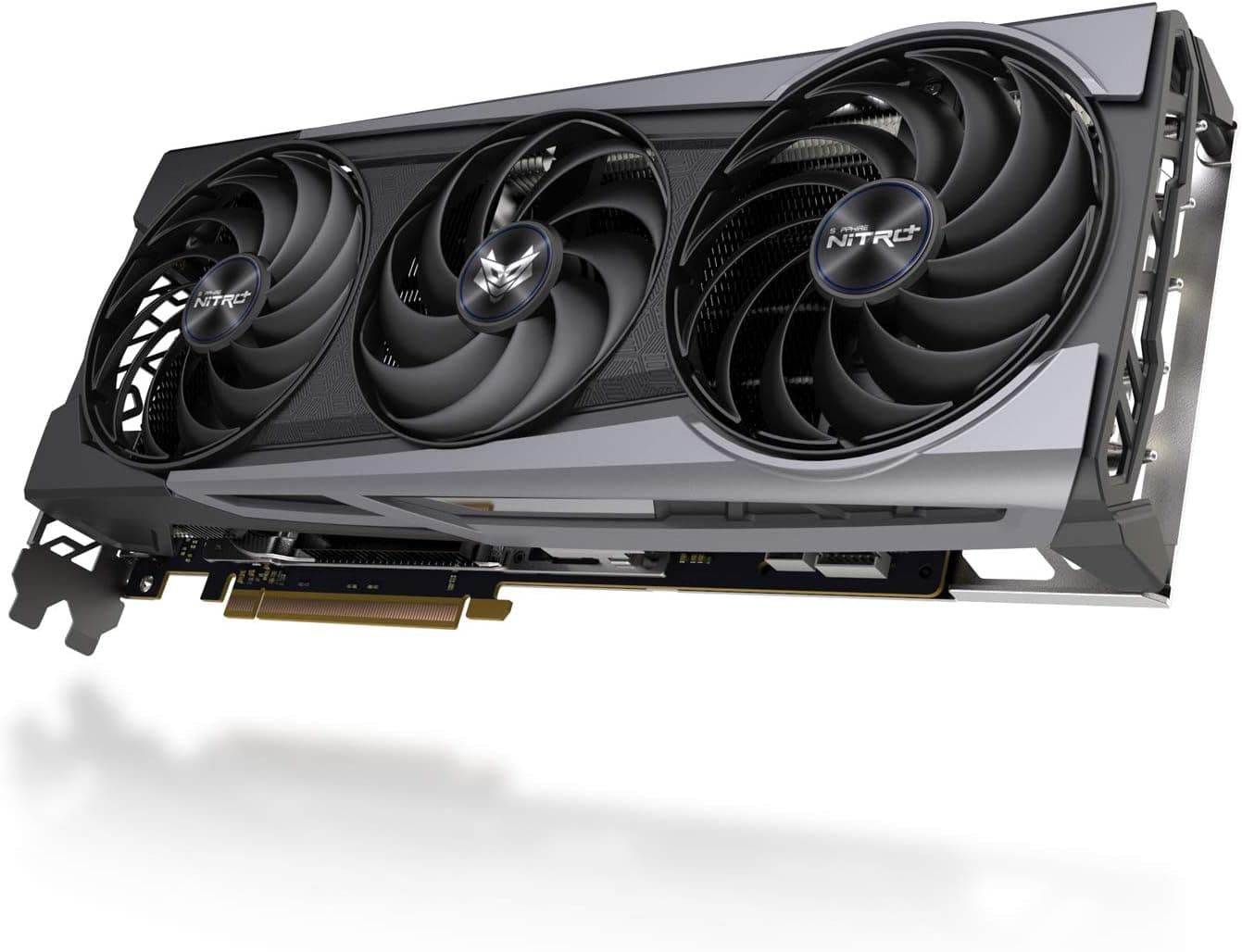
The Sapphire NITRO+ Radeon RX 6800 OC (model 11305-01-20G VD7467) is a premium custom graphics card built around AMD's RDNA 2 architecture. With a game clock of 1,980 MHz and boost clock reaching 2,190 MHz, it surpasses reference specs to deliver excellent 1440p and capable 4K gaming performance. The 16 GB GDDR6 memory on a 256-bit bus (16 Gbps effective) provides ample bandwidth and headroom for high-resolution textures and future game demands. Sapphire’s NITRO+ cooling system combines a large fin-stack heatsink with three axial fans, ensuring the GPU stays within safe temperatures even during prolonged gaming sessions. The metal backplate and customizable RGB lighting add both rigidity and aesthetic appeal. This card occupies a dual-slot form factor with an approximate length of 310 mm, so check your case clearance beforehand. Launched in October 2020, the RX 6800 series competes directly with NVIDIA’s RTX 3070 and RTX 3080. The NITRO+ variant stands out with factory-overclocked speeds and superior cooling, making it a strong choice for enthusiasts who prioritize stability and out-of-box performance over the reference design.
Compatibility Guide
The card uses a PCIe 4.0 x16 interface and is backward compatible with PCIe 3.0 slots. In PCIe 3.0 mode, bandwidth is halved, but the performance impact for the RX 6800 is negligible in most real-world scenarios. Power is supplied via two 8-pin PCIe connectors (included adapter if needed). A 600 W power supply is the minimum recommendation; for stability under sustained load, a 650 W unit is advised. Physical dimensions are approximately 310 mm long and dual-slot wide. Most mid-tower and full-tower ATX cases will accommodate it, but compact mATX or ITX builds may face clearance issues. Always measure available GPU space, especially when front radiators or drive cages are present.
Product Info
The Sapphire NITRO+ Radeon RX 6800 OC is a custom-designed card from AMD’s premier board partner. It comes with a 2-year manufacturer warranty (as Japan authorized product). Market positioning is high-end, offering better clocks and thermal headroom than the reference RX 6800 at a moderate price premium. Key specifications: GPU: AMD Radeon RX 6800 (Navi 21, 7nm, RDNA 2.0) Clocks: Game 1,980 MHz / Boost 2,190 MHz Memory: 16 GB GDDR6, 256-bit, 16 Gbps, 512 GB/s bandwidth Stream processors: 3,840 RT cores: 60 FP32 compute: ~16.17 TFLOPS TDP: 250 W, recommended PSU: 600 W+ Display outputs: 3× DisplayPort 1.4, 1× HDMI 2.1
Best Use Cases
1440p high-refresh gaming – The RX 6800 can comfortably push 1440p at 144+ fps in competitive titles and maintain over 60 fps in demanding AAA games at high settings. The 16 GB VRAM ensures textures don’t need to be downscaled. Budget-friendly 4K gaming – For gamers willing to dial back ray tracing or use FSR, 4K 60 fps is achievable in many titles. The VRAM buffer handles 4K assets without stutter. * Content creation on a budget – Video editing (4K timelines in DaVinci Resolve or Premiere Pro) and 3D rendering benefit from the large VRAM and FP32 performance, though NVIDIA’s CUDA ecosystem remains stronger for some workflows. ## Alternatives
Direct competitors include the NVIDIA GeForce RTX 3070 (8 GB) and RTX 3080 (10 GB). The RX 6800 beats the RTX 3070 by a wide margin in raw rasterization and VRAM capacity, and it even exceeds the RTX 3080 in VRAM. However, NVIDIA holds a lead in ray tracing performance and offers DLSS, which currently has broader game support than AMD’s FSR. Another AMD alternative is the RX 6800 XT, which features 4,608 stream processors and higher boost clocks for about 10–15% more raster speed, but at a higher price. The NITRO+ RX 6800 OC delivers excellent value for those who don’t need the absolute top tier but still want a powerful high-refresh 1440p card.
Things to Consider
The card is relatively long (~310 mm) and may not fit in smaller cases or those with front-mounted radiators. Measure clearance before purchase. Power supply requirements are real: a high-quality 650 W unit is recommended over a bare-minimum 600 W to handle transient spikes without tripping. Ray tracing performance lags behind NVIDIA’s offerings, so if you frequently play ray-traced titles at high settings, an RTX 3070/3080 might be a better fit. That said, the FSR upscaling ecosystem is maturing, and with 16 GB VRAM, the card is well-prepared for future titles that demand more memory. If you upgrade every 3–4 years, this GPU offers strong longevity.
Product Disclosure (Amazon)
- Manufacturer: SAPPHIRE
- ASIN: B08PD5319M
- Note: This article covers a manufacturer-made product based on Amazon listing details.