Game Overview
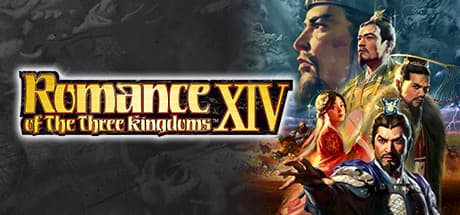
Romance of the Three Kingdoms XIV: Conquer China with Strategic Territory Control is a historical strategy game about expanding a faction across Three Kingdoms-era China. Released on January 16, 2020, it was developed and published by KOEI TECMO GAMES CO., LTD.
A campaign revolves around assigning officers, developing cities, organizing armies, conducting diplomacy, and advancing toward the unification of China. Capturing cities matters, but the routes connecting them matter as well.
Players must decide where to extend their influence and how to keep an advance connected to friendly territory.
Territory Control as an Area
The defining system replaces purely point-based control with an area-based map. Land changes to a faction's color as its influence spreads, making borders, approaches, and contested ground easy to read at a glance.
That colored territory is more than decoration. An army operating away from its cities benefits from a stable connection behind it, while exposed routes can create openings for the enemy.
A direct charge at a city may therefore be less effective than securing nearby ground or disrupting the opponent's connection first.
This makes seemingly minor territorial moves part of a larger campaign. Army strength remains important, but players must also decide which ground to claim, which border to defend, and when the front is stable enough to advance.
Reading the 46 Cities and Roughly 340 Regions
China appears as one continuous map containing 46 cities and approximately 340 regions. The key distinction is that conflict takes place across the many areas between major settlements rather than only at isolated city locations.
A city bordering several rivals can become a useful launch point, but it may also demand defenses in multiple directions. A more secure position can let a faction concentrate officers and troops before beginning its next campaign.
Evaluating the land around a city is therefore as important as counting the cities already owned.
Expansion also increases the territory that must be managed. Advancing in every direction can leave a faction with thin borders and scattered forces.
Choosing one main objective while stabilizing other fronts is a more dependable way to handle a long campaign.
Domestic Affairs, Officers, and Diplomacy
Military campaigns depend on more than battlefield power. Resources, officer assignments, city administration, and diplomatic relations all contribute to a faction's ability to keep fighting.
Sending every capable officer to the front can weaken the rear, while focusing only on development can allow an opponent to seize the initiative.
Officers provide choices about who should lead an army and who should handle supporting work. Instead of relying on one elite force everywhere, it is often useful to divide responsibilities among attack, defense, territorial control, and support.
That division becomes increasingly important as the realm grows.
Diplomacy is best treated as a tool for controlling the number of immediate threats and deciding the order of expansion. Players who consider which faction they will border after the next conquest are likely to get more from the strategic layer than those focused only on the current battle.
A Practical Early-Game Approach
Early expansion should account for routes between cities, exposed approaches, and the distance required to reinforce a front. A long, narrow strip of friendly land can be vulnerable even when it looks impressive on the map, so shaping a defensible border is often more valuable than coloring every available region.
Fighting several rivals at once can scatter both officers and troops. Selecting a primary target and assigning defenders elsewhere makes the main army easier to use.
During an offensive, players should also watch the land behind advancing units instead of looking only at the destination city.
System Requirements
The minimum requirements list 64-bit Windows 10, an Intel Core i3-3220 at 3.0 GHz or faster, an NVIDIA GeForce GTX 660, 4 GB of RAM, and DirectX 11.
The game also needs 20 GB of available storage and a display capable of at least 1280×720.
The listed processor and graphics card come from older hardware generations, but minimum requirements should still be treated as an operating baseline. Because the interface presents a large map with many cities, regions, and armies, a low display resolution may feel restrictive when reading information and monitoring several fronts.
No recommended specification is provided in the supplied data, so performance at higher resolutions or settings cannot be guaranteed here.Check the review panel on this page or the Steam listing for the latest user review trend.
Reception and Player Expectations
Player reception is divided. The area-control system and the need to protect connections can give the campaign a distinct sense of shaping and maintaining a front.
Players who enjoy watching a realm expand through many deliberate territorial gains are more likely to appreciate that focus.
The same structure requires ongoing attention to officers, cities, armies, and borders. Anyone primarily seeking brief sessions or constant spectacle may find the pace demanding.
Series veterans should also judge it on its area-control emphasis instead of assuming that it plays exactly like an earlier installment.
Who Should Play It
The game suits players who want to recruit Three Kingdoms officers and build a long-term plan that combines domestic administration with warfare. It is also a strong fit for those who enjoy supply routes, shifting borders, and the strategic meaning of movement across a broad map.
Its territory system is most compelling when small positional advantages feel as rewarding as winning a major battle. Supported languages include English, Japanese, Simplified Chinese, Traditional Chinese, and Korean.
Listed Steam features include achievements, trading cards, cloud support, and multiplayer capabilities.
Limitations and Who Should Skip It
Players looking for detailed direct control of every clash or a series of short, self-contained matches may prefer a different kind of strategy game. Romance of the Three Kingdoms XIV asks the player to spend substantial time reviewing the map, adjusting assignments, and maintaining an expanding realm.
Only minimum hardware requirements are available in the supplied information, so meeting them does not guarantee a preferred resolution or settings. Store listings for features and language support can also change, making it sensible to compare the current product page with the intended PC and play style before purchasing.