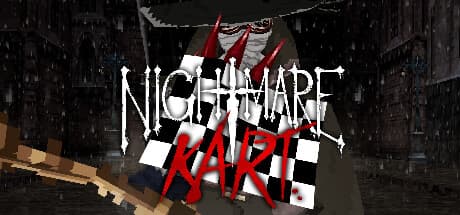
Nightmare Kart: Gothic Vehicular Combat Racing is an arcade racer from LWMedia in which a beast hunter pilots strange machines built from copper and steam. Races unfold through blood-soaked gothic streets, where weapons, monsters, and bosses matter as much as cornering.
Released on June 5, 2024, it includes both single-player and multiplayer modes.
Game Overview
The core loop combines racing, attacking enemies, generating Æther through drifts and tricks, and spending that resource on boosts. This is not a conventional racer where following the fastest line is the only concern.
Players must decide when combat is worth the risk and when maintaining momentum is more important.
Defeating monsters during a race can increase the vehicle's top speed, so enemies are more than obstacles. Avoiding a fight may preserve a clean line, while engaging can create a lasting speed advantage for later sections.
Boss encounters further emphasize the combination of driving and weapon use.
How Racing and Combat Connect
The distinctive part of Nightmare Kart is the way drifting, tricks, combat, and acceleration feed into one another. Drifts and tricks generate Æther, Æther powers boosts, and defeated beasts improve top speed.
A successful run therefore depends on building resources without losing control of the vehicle.
New players should first identify corners that allow stable drifts and straights where weapons can be used safely. Spending every boost immediately is rarely as useful as saving it for an exit, an overtake, or recovery after losing speed.
The handling is arcade-focused, but small resource decisions can influence the outcome of a race.
Gothic Setting and Story
Copper-and-steam vehicles, blood-stained streets, and the beast-hunter protagonist distinguish the game from cheerful kart racers. The character has been forced into a nightmarish tournament and races to uncover its origin.
Progress through races and boss battles therefore provides a narrative objective beyond simply winning isolated events.
The Souls-like association is best understood as part of the gothic hunting theme rather than a promise of weighty melee combat or elaborate character builds. Vehicular combat and arcade racing remain the central systems.
Players drawn to the imagery should still expect a fast racing game rather than a traditional action RPG.
System Requirements
The supplied minimum requirements list Windows 10 and 300 MB of available storage. That is a modest storage requirement, although leaving additional room for updates and save data is sensible.
No CPU or memory requirement is included in the provided data, so a precise performance tier cannot be inferred.
The GPU field is listed only as “512,” without a unit or a model name. That entry is too ambiguous to confirm whether a particular integrated or dedicated GPU will work.
Players using older hardware should check the latest store listing and begin with conservative graphics settings rather than treating the incomplete value as a guarantee.
Reception and Common Impressions
Nightmare Kart has maintained strong player sentiment over time. Its clearest strengths are the immediately recognizable gothic identity, responsive arcade structure, and the way combat contributes to speed progression.
The rules are easy to understand, while optimizing attack opportunities and Æther use gives repeated runs a purpose.
It is less suitable for players seeking realistic physics, extensive vehicle tuning, or a pure test of racing lines. Combat creates busy situations in which an otherwise clean run can be disrupted.
Enjoyment therefore depends partly on accepting the unpredictable nature of a combat racer.
Who Should Play It
This is a good match for players who want weapons, monsters, and boss encounters inside an arcade racing framework. It also suits anyone attracted to gothic cities, mechanical contraptions, and beast-hunting imagery.
Players who enjoy filling a boost resource through active driving and learning the best places to spend it should find a clear improvement loop.
Single-player offers a route into the setting and boss encounters, while multiplayer supports more chaotic competition. A practical approach is to learn the handling first, then identify where each course offers safe drift lines, useful attacks, and effective boost opportunities.
Limitations and Who May Not Enjoy It
Players looking for a serious driving simulator, authentic licensed cars, or realistic vehicle behavior should look elsewhere. The imagery is also darker than the word “kart” may suggest, with monsters and blood-soaked gothic environments.
Those who dislike horror themes may find the presentation uncomfortable even if they enjoy arcade racing.
Hardware guidance is another limitation because the supplied GPU entry is unclear and CPU and memory details are absent. Owners of older PCs should verify the current requirements and test cautiously.
The provided data also does not confirm language support, so players who require a specific interface language should check the product page before playing.