Game Overview
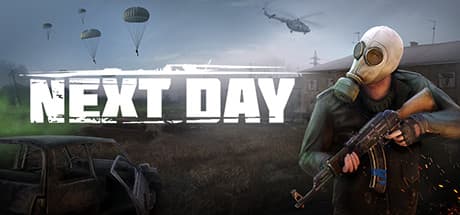
Next Day: Survival - Eastern European Toxic Fog Survival is an open-world survival game set in a post-apocalyptic Eastern Europe where toxic fog has made much of the land uninhabitable. Developed by SOFF Games and published by Last Level, it was released on May 21, 2018.
The core loop involves exploring dangerous territory, managing resources, improving character skills, and building a reputation. Environmental hazards are only part of the threat: NPCs and other players can become allies, obstacles, or direct opponents.
Survival therefore depends on deciding when to cooperate, when to avoid contact, and when a confrontation is worth the risk.
This is less about following a single linear campaign and more about repeating a cycle of exploration, preparation, progression, and combat. Resources matter because they support the next trip into hostile territory.
The important decisions concern how far to push, what to preserve, and which risks are justified by the possible reward.
Features and Systems
Character progression is not limited to combat skills. Your actions also build a reputation, and that reputation can open opportunities to join survivor factions.
Since factions have their own characteristics and restrictions, progression includes choosing relationships rather than simply accumulating stronger equipment.
Crafting and resource management connect exploration to survival. Materials are not merely collectibles; they help prepare the character for later journeys and more dangerous encounters.
Players who enjoy choosing between immediate use and longer-term preparation are more likely to appreciate this part of the design.
Available modes include Single-player, PvE, and Last Survivor. They provide options for learning the world alone, facing non-player threats, or emphasizing competition between survivors.
The game is still built around a multiplayer-focused survival concept, so its solo experience should not automatically be expected to offer the structure or density of a dedicated single-player RPG.
A Practical Start
A cautious opening is more sensible than immediately traveling deep into unfamiliar territory. Exploring nearby areas first helps establish what resources do, which threats can be handled, and what should be saved for later.
Separating supplies needed for continued exploration from materials intended for progression can make early decisions clearer.
NPC and faction relationships also deserve attention. Because reputation affects opportunities with survivor groups, an action that offers an immediate benefit may limit later choices.
In modes involving other players, it is wise to secure supplies and an escape route before treating a stranger as an ally.
System Requirements
Check the review panel on this page or the Steam listing for the latest user review trend.1, and 10.
The CPU requirement is a dual-core Intel Core i3 with Hyper-Threading, accompanied by 6 GB of RAM. Graphics hardware needs at least 1 GB of VRAM and Shader Model 3.0 support.
The game also requires DirectX 11 and 12 GB of available storage. These figures are modest by current gaming-PC standards, but minimum specifications indicate a baseline for running the game rather than a promise of high settings or a consistently high frame rate.
No recommended specification is included in the supplied data, so systems near the minimum should begin with reduced graphics settings and test performance in wider or busier areas.
Check the review panel on this page or the Steam listing for the latest user review trend. The listing may simply reflect the game's age, but formal compatibility cannot be assumed from the available information.
Players using Windows 11 should check the current store listing and recent reports from users with comparable hardware.
Reception and What to Check
Player reception is divided. The supplied data does not identify the recurring reasons behind positive or negative responses, so it would be misleading to attribute the split to combat, optimization, population, or any other specific issue.
Prospective players should inspect current feedback, prioritizing recent posts and reports from hardware similar to their own.
Expectations matter because the design combines survival, RPG progression, crafting, factions, and player interaction. Someone looking only for tightly structured competitive gunplay may judge it very differently from someone who enjoys scavenging, preparation, and uncertain encounters in an open world.
Who Should Play It
The game suits players who like bleak post-apocalyptic settings and want exploration to involve resource and risk decisions. It is also a better fit for those interested in developing reputation and faction relationships alongside ordinary character skills.
The selection of Single-player, PvE, and Last Survivor modes may appeal to players who want different kinds of sessions rather than one fixed format. Its strongest match is a player who considers preparation, scavenging, and adaptation part of the fun instead of downtime between firefights.
Caveats and Who May Not Enjoy It
Japanese is not among the listed supported languages. The supplied language data names English, Russian, French, and German, so anyone who needs Japanese menus or explanations should verify the current language listing before purchasing.
There is also no supplied recommended hardware tier. Meeting the minimum does not guarantee the image quality or frame rate a particular player considers comfortable.
Owners of older PCs should assess CPU headroom and available memory as well as the stated VRAM baseline.
Players seeking a tightly authored solo narrative, short competitive matches, or constant objective guidance may find the structure unsuitable. The same applies to anyone who regards scavenging and gradual progression as chores.
Because this is an older multiplayer-focused release, current player activity and the present state of support should be checked before making a decision.


