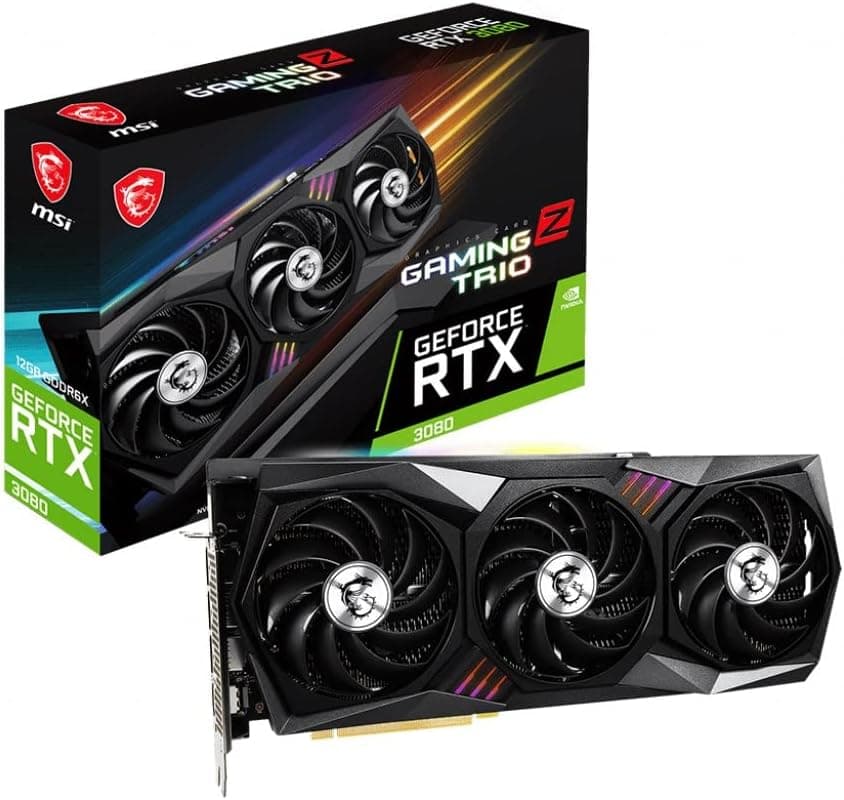
Overview
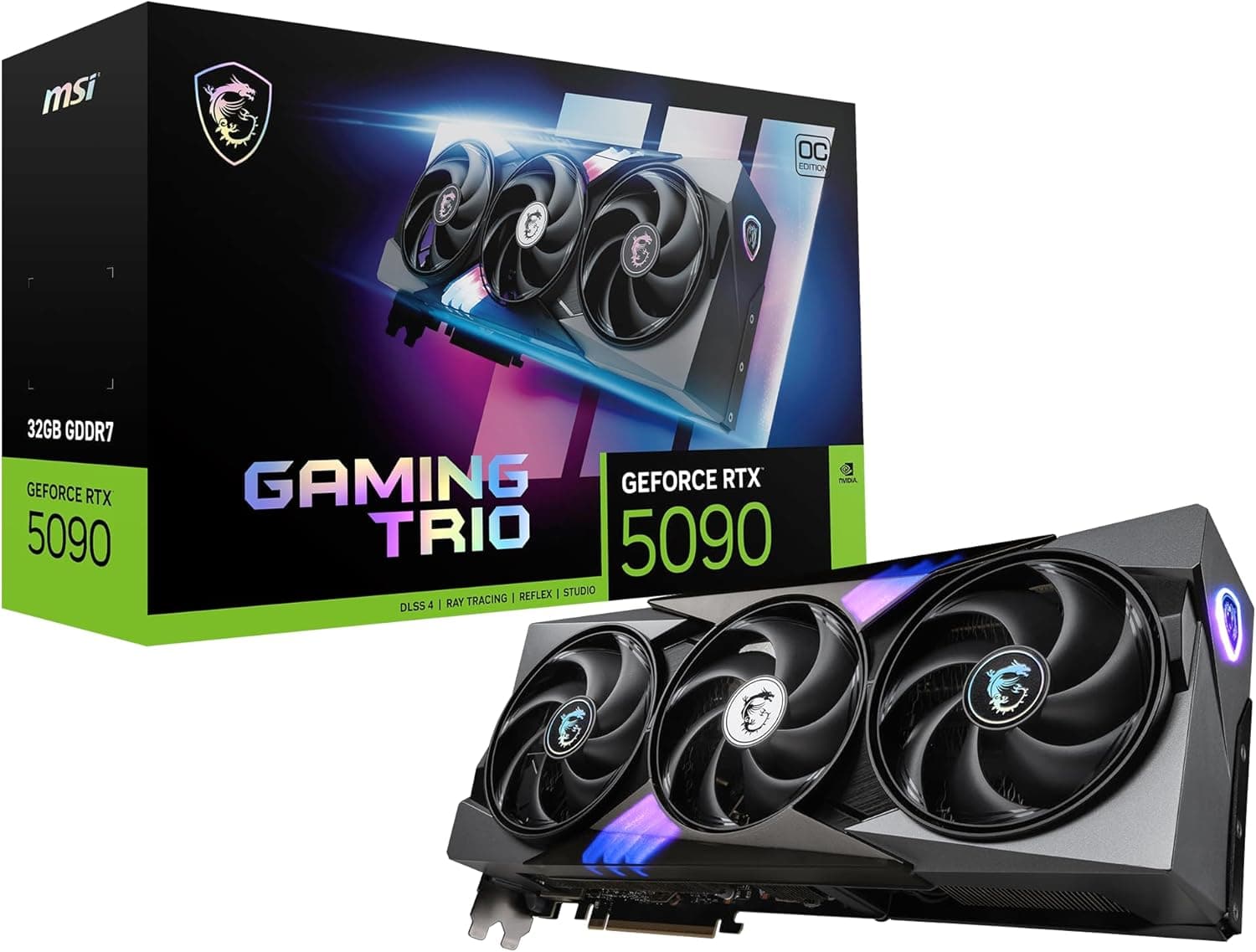
The MSI GeForce RTX 3080 GAMING Z TRIO 12G LHR is a mid-high range graphics card that sits between the RTX 4070 Super and RTX 4080 in NVIDIA's GPU lineup. Powered by the Ampere architecture (8nm process), it features a boost clock of 1,815MHz and 12GB of GDDR6X memory on a 384-bit bus, delivering exceptional performance across 1440p and 4K gaming. Its TDP is rated at 320W, and the custom Tri Frozr 2 triple-fan cooler keeps temperatures manageable even under prolonged gaming loads. This card carries the LHR (Lite Hash Rate) designation, which reduces its cryptocurrency mining efficiency. While that may slightly limit resale value among miners, it has helped keep this model more affordable and available for gamers. The extra VRAM (12GB vs the original 10GB RTX 3080) provides additional headroom for high-resolution textures and certain creative workloads. Market positioning is solidly mid-high tier: it offers performance close to the RTX 4070 Super but with more VRAM, making it a strong contender for 4K gaming without the price tag of an RTX 4080.
Compatibility Guide
Interface: PCI Express 4.0 x16 (backward compatible with PCIe 3.0). Power connectors: Two 8-pin PCIe power cables. A minimum 750W PSU is recommended; 850W or higher is safer for high-end CPUs. Form factor: Triple-slot, ATX standard. Length is approximately 32.4cm, so check your case's maximum GPU length before purchasing. Display outputs: 3x DisplayPort 1.4a and 1x HDMI 2.1, supporting up to four simultaneous displays and G-Sync compatibility.
Product Info
Released in early 2022 as part of the LHR refresh, this model is still widely available both new and on the used market. Warranty periods vary by retailer but typically range from one to three years. The TDP is 320W, though actual gaming power draw usually falls between 250W and 300W. It is a mid-high tier card because, while being a generation behind the RTX 40 series, its 12GB VRAM and high CUDA core count (8704) provide very capable 1440p and 4K gaming performance, especially with DLSS enabled.
Best Use Cases
4K gaming on a budget: If you want to play AAA games at 4K without spending over $800, the RTX 3080 12GB offers a sweet spot. With DLSS Quality mode, many titles can maintain 60fps or higher at high settings. Content creation with large VRAM demands: Video editors using DaVinci Resolve or 3D artists in Blender will benefit from the 12GB frame buffer. CUDA acceleration speeds up rendering tasks significantly compared to previous-generation cards. * Upgrading from older high-end cards: Users moving from a GTX 1080 Ti or RTX 2070 Super will see a dramatic improvement in ray-tracing capabilities and overall raw performance, making this a worthwhile upgrade. ## Alternatives
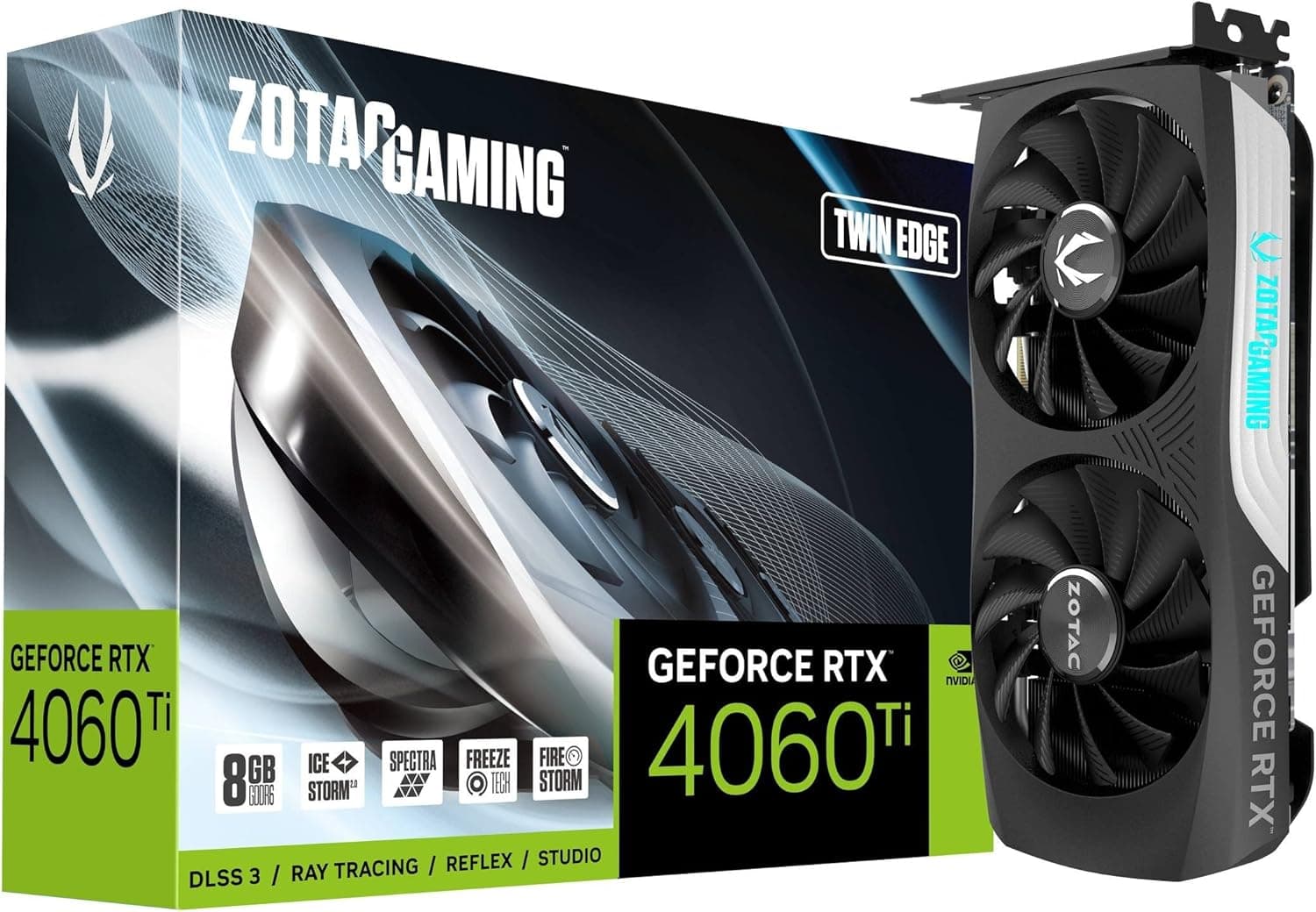
ASUS TUF Gaming RTX 3080 OC 12GB: Slightly more rugged build with military-grade components, but similar cooling performance. MSI's GAMING Z TRIO offers better software tools (MSI Center and Afterburner) and customizable RGB lighting. ZOTAC GAMING RTX 3080 Trinity OC 12GB LHR: More compact (2.5 slots) and easier to fit in smaller cases, but the Tri Frozr 2 cooler on the MSI handles heat more effectively under sustained loads. Pricing is similar, but MSI generally has stronger resale value.
Things to Consider
Power supply requirements are not trivial; a 320W TDP demands a quality PSU with sufficient 12V rail capacity. Pairing with a high-current CPU (like Core i7-13700K or Ryzen 9 7950X) may push total system draw beyond 600W, making a 850W unit advisable. Physical size is a key constraint: at 324mm length, this card will not fit in many Mini-ITX cases or some mid-towers with pre-installed HDD cages. Always double-check clearance measurements. * If you already own an RTX 3080 10GB version, the upgrade to 12GB is marginal unless you specifically need the extra VRAM for 4K ultra textures or large production files. In most gaming scenarios, the performance difference is below 5%.
![MSI MPG Z490 GAMING PLUS マザーボード ATX [Intel Z490チップセット搭載] MB4954](/_next/image?url=https%3A%2F%2Fm.media-amazon.com%2Fimages%2FI%2F91IeBiALX9L._AC_SL1500_.jpg&w=1920&q=75)