Game Overview
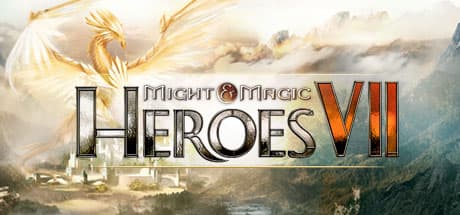
Might & Magic® Heroes® VII: A War of Succession is a turn-based strategy RPG set in Ashan after the assassination of its Empress. Duke Ivan gathers six trusted advisors while rival claimants struggle for the throne, using their stories and counsel to decide how order might be restored.
Developed by Limbic Entertainment and published by Ubisoft, the game was released on September 29, 2015.
The main loop combines map exploration, resource collection, settlement development, army recruitment, and battles led by persistent heroes. Movement and economic decisions take place on a strategic map, while contact with an enemy shifts play into turn-based combat between creature stacks.
Because hero growth and army composition reinforce each other, success depends on more than simply recruiting the largest force available.
Features and Systems
Each turn asks you to divide attention between exploration, construction, recruitment, and control of useful locations. Expanding too quickly can leave your economy underdeveloped, while waiting too long can surrender valuable resources and routes to an opponent.
Small decisions therefore shape the size and flexibility of the army available in later encounters.
Combat centers on positioning creatures with different roles while accounting for initiative, movement, and attack range. Hero abilities and magic can influence the field, but losses persist beyond the current encounter and may weaken the rest of an expedition.
Efficient victories matter: preserving troops can be as important as defeating the enemy in front of you.
Both single-player and multiplayer modes are listed, alongside Steam Achievements and Steam Trading Cards. A story campaign emphasizes learning the world and developing heroes over time, while multiplayer places more weight on predicting another player's expansion and timing.
Newcomers will generally have an easier introduction through single-player before testing unfamiliar factions against human opponents.
What Defines the Succession War
The narrative is framed around Ivan's council of six advisors. Rather than presenting the struggle for the throne as one uninterrupted account, it uses several perspectives and stories to examine the choices expected of a ruler.
Those accounts are played through strategic maps and battles, connecting the lore to decisions made on the board.
This is not an RPG designed only for quickly consuming dialogue and cinematic scenes. Story progress is interwoven with scouting, settlement management, recruitment, and tactical encounters.
It is consequently better suited to players who enjoy deliberate preparation than to those seeking a rapid series of action-heavy battles.
System Requirements in Practice
The minimum specification lists 64-bit Windows 8 or 8.1, an Intel Core i5 660 at 3.3 GHz or AMD Phenom II X4 955 at 3.2 GHz, a GeForce GTX 460 or Radeon HD 5850 with 1 GB VRAM, and 4 GB RAM.
The recommended specification raises this to an Intel Core i5-2400 at 3.1 GHz or AMD FX-6100 at 3.3 GHz, a GeForce GTX 670 or Radeon HD 7870 with 2 GB VRAM, and 6 GB RAM.
Although these are older components, the minimum list should be treated as a starting point rather than a promise of ideal performance or image quality.
The supplied notes say the game was originally released for Windows 7 and can be played on Windows 10 and Windows 11. Because its listed operating-system requirements reflect an earlier PC era, check current compatibility reports for your hardware instead of assuming that every modern configuration behaves identically.
The listing also states that the game contains Denuvo anti-tamper technology, which may matter to players who avoid additional authentication or protection systems.
No storage requirement is included in the supplied specifications, so verify the current Steam listing before installation. Laptop users should also confirm which GPU the game will use and how much dedicated VRAM is available; a model name alone does not always describe the active configuration.
Reception and Review Pattern
User sentiment is divided, so the franchise name and fantasy setting alone are not sufficient reasons to buy. The combination of exploration, settlement growth, hero development, and army combat remains the clearest attraction.
Players who enjoy winning through preparation and resource allocation have a stronger reason to consider it than those interested only in isolated battles.
Because reception is not uniformly positive, inspect recent player reports about stability, controls, and progression issues that matter to you. Series veterans should also avoid judging solely from memories of earlier entries.
Watching representative campaign and combat footage can clarify whether this installment's pacing and presentation match their expectations.
Who It Suits
The game suits players who want to balance exploration, economic growth, and combat one turn at a time. Its heroes develop while commanding armies of fantasy creatures, making it appealing to those who enjoy both character progression and force management.
The succession conflict also gives narrative context to strategic choices instead of separating story from gameplay.
It favors planning over real-time execution. The result of a battle reflects not only battlefield moves, but also earlier choices about buildings, routes, recruitment, and troop preservation.
Players who regard experimentation and occasional setbacks as part of learning a strategy game are more likely to appreciate its core loop.
Caveats and Who Should Skip It
The listed languages include English, French, Italian, German, Spanish, Czech, Hungarian, Korean, Polish, Russian, Arabic, Traditional Chinese, and Romanian, but not Japanese. Since the campaign and ability descriptions can affect strategic decisions, this is an important limitation for anyone who requires Japanese text.
Confirm the current language listing before purchasing.
Turn-based pacing does not make the game mechanically simple. Resources, construction, hero development, exploration, and army losses must all be managed together, which may feel dense to strategy newcomers.
Players seeking short sessions with immediate rewards, or those who want battles without an economic layer, may find the structure demanding.
The store information also combines requirements written for older operating systems with notes about newer Windows versions. Check recent compatibility experiences, the current handling of Denuvo, and multiplayer activity before committing.
With divided user sentiment, identifying your personal deal-breakers is more useful than relying on the series reputation alone.