Overview
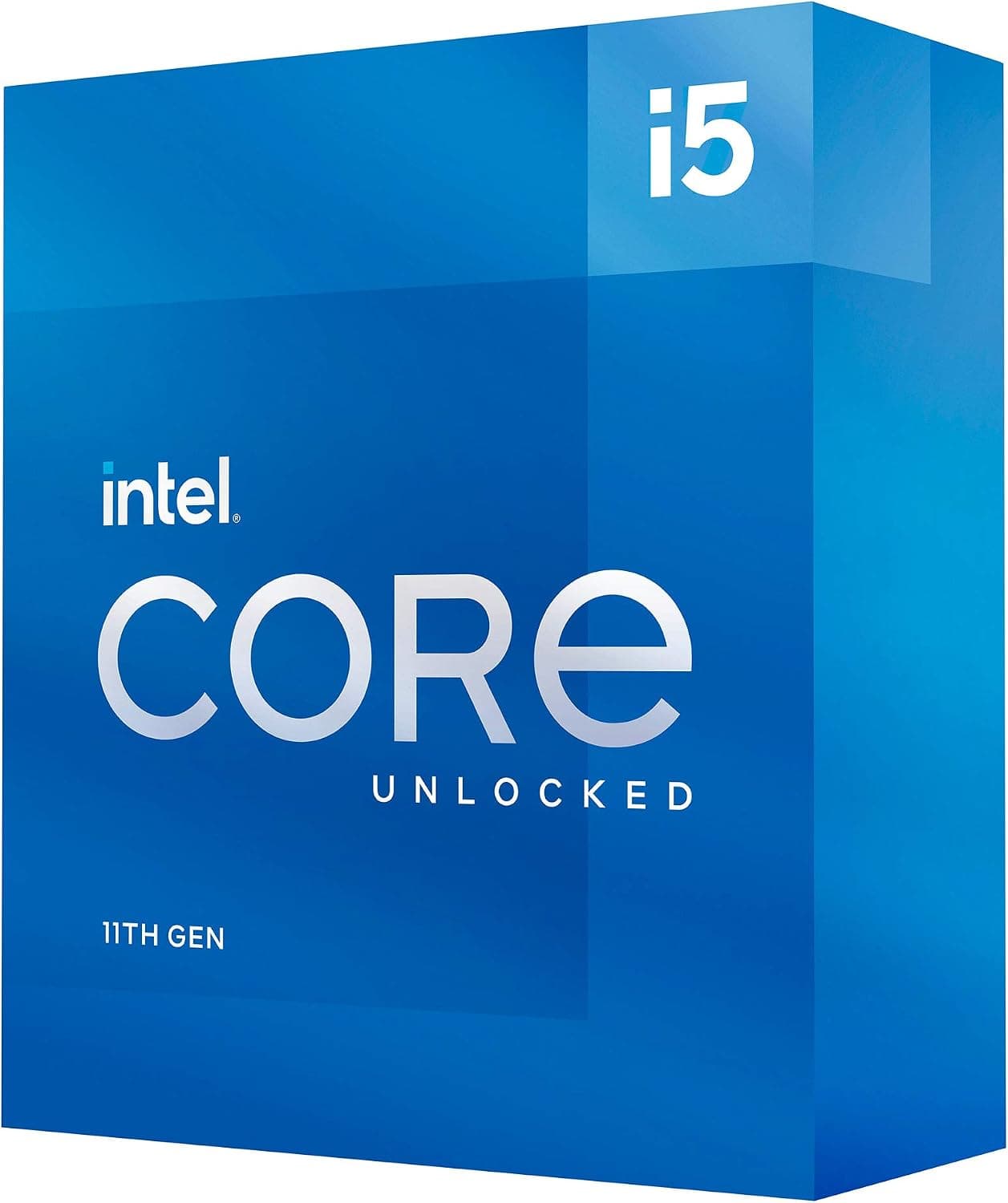
The Intel Core i9 11900F BOX is a desktop processor from Intel's 11th generation Core lineup. It features 8 cores and 16 threads, with a base clock of 2.5 GHz and a maximum boost clock of 5.2 GHz. The CPU includes 16 MB of L3 cache and carries a 65W TDP, making it one of the more power-efficient options in the Core i9 family.
This is an F-series processor, meaning it has no integrated graphics. You will need a discrete graphics card to get any video output from a system built around this CPU. That makes it a sensible pick for builders who already own a GPU or are planning a gaming-focused rig from scratch.
In the broader market, the Core i9 11900F sits at the high end of the 11th generation lineup, but with a deliberately lower 65W TDP compared to the 125W K-series parts. It targets users who want Core i9-class performance without pushing their cooling and power delivery to the limit.
Compatibility Guide
The Core i9 11900F uses the LGA1200 socket. It pairs with Intel 500-series chipsets such as Z590, H570, B560, and H510. Some 400-series boards may work after a BIOS update, but you should verify compatibility on the motherboard manufacturer's website before buying.
Memory support is DDR4. Most boards in this generation support DDR4-3200, though the exact supported speed depends on the motherboard model. Checking the QVL list for your specific board is a good habit.
A CPU cooler is included in the box. Since the TDP is a modest 65W, the stock cooler can handle normal workloads. If you want quieter operation or plan sustained heavy loads, an aftermarket LGA1200-compatible cooler is a worthwhile upgrade.
For the power supply, remember that the CPU's 65W TDP is only part of the equation. The GPU and other components determine the total system draw, so choose your PSU based on the full build. See the spec table for the recommended wattage.
Product Info
The Core i9 11900F was released in 2021 as part of Intel's 11th generation Rocket Lake family. It is available through Intel's official channels and major PC parts retailers, including online retailers.
Its market position is interesting: it carries the Core i9 badge but with a 65W TDP, compared to 125W for the unlocked Core i9-11900K. This makes it a high-tier CPU with lower cooling and power demands, appealing to users who want strong multi-core performance without the associated heat and electricity costs.
Confirm the exact terms with your retailer at the time of purchase, as policies can vary.
Best Use Cases
Gamers building a new PC with an existing graphics card are a natural fit. Since the CPU has no integrated graphics, you avoid paying for silicon you won't use. This works well for someone targeting 1080p gaming with a mid-range or higher GPU.
Content creators doing video editing or 3D rendering will appreciate the 8-core, 16-thread configuration. Multi-threaded applications scale well with this CPU. Just remember that GPU-accelerated workflows still require a discrete graphics card.
Users who want a power-efficient high-end build are another good match. The 65W TDP keeps cooling requirements modest, which helps with quiet PC builds and lower electricity bills.
On the other hand, this CPU is not for anyone who wants to skip a graphics card entirely. Office users or HTPC builders who rely on integrated graphics should look at non-F variants instead.
Things to Consider
The most obvious limitation is the lack of integrated graphics. You must have a discrete GPU, which adds cost and complexity to the build. If you ever need to troubleshoot a GPU failure, you won't have a fallback display output.
The LGA1200 platform is now a few generations old. Upgrading to a newer CPU later will require a new motherboard as well, since Intel moved to LGA1700 and then LGA1851. If you value a long upgrade path, a current-generation platform might be a better investment.
While the 65W TDP is attractive, boost clocks up to 5.2 GHz will draw more power under load. The stock cooler is adequate for typical use, but sustained heavy workloads may push it to its limits. An aftermarket cooler is a reasonable addition for demanding applications.
Finally, the 11th generation is not the newest architecture. For the latest games and applications at maximum settings, newer CPUs offer better performance per watt and more features. This CPU makes sense when you can get it at a good price and already have compatible components.
FAQ
Q: Can this CPU run a PC on its own?
A: No. It has no integrated graphics, so you must install a discrete graphics card to get any video output. The system will not display anything without one.
Q: Which motherboards are compatible?
A: You need an LGA1200 board. Intel 500-series chipsets (Z590, H570, B560, H510) are the primary options.
Product Disclosure (Amazon)
- Manufacturer: インテル
- Seller: NERURA
- Fulfilled by: NERURA
- ASIN: B08X6KFM3N
- Note: This article covers a manufacturer-made product based on Amazon listing details.