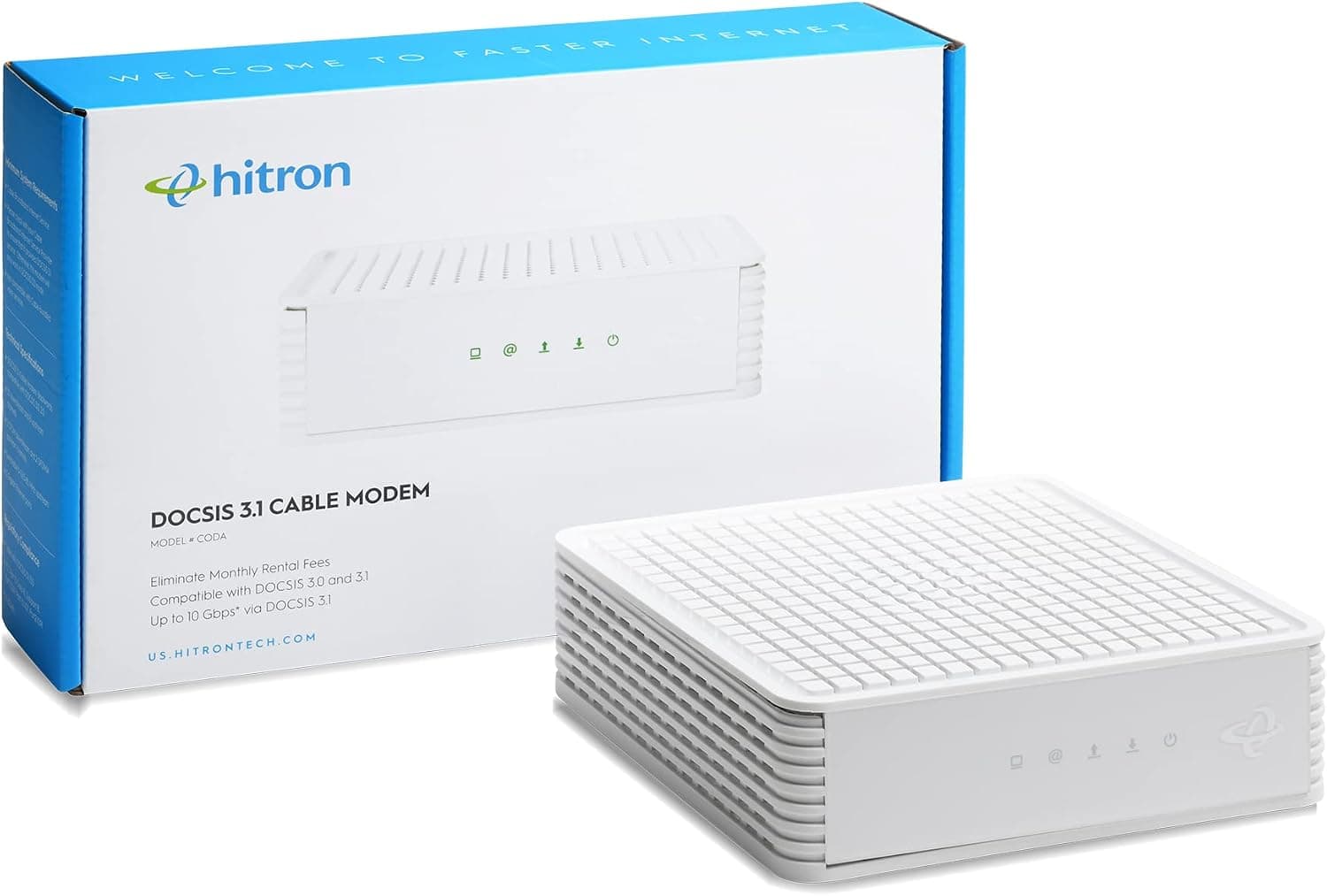
This article looks at the Hitron CODA DOCSIS 3.1 modem using its actual specs, pricing, and review data.
The short version: it is built for people on North American cable internet who want to stop paying a monthly modem rental fee — and it is not a product you can simply drop onto a Japanese line.
Overview
The Hitron CODA is a DOCSIS 3.1 cable modem rated for download speeds up to 1Gbps and certified by Comcast Xfinity, Charter Spectrum, Cox, and Zito Media.
It has no built-in Wi-Fi: this is a modem only, and you are expected to bring your own router.
On Amazon.co.jp it carries 1,226 reviews at an 82% positive score (4.1 out of 5), both captured in September 2026.
Over a thousand reviews is a solid sample for networking gear in this class, which suggests the product is not wildly hit-or-miss. At the same time, 4.1 is not a near-perfect score — a meaningful share of the low ratings almost certainly come from ISP certification and setup problems rather than raw performance.
The chassis measures 17.1 × 17.1 × 5.2 cm, typical for a cable modem, and it offers two 1Gbps Ethernet ports.
Compatibility Guide
The thing that trips people up here is not speed — it is whether your ISP has certified the exact model. On cable networks, a modem that meets the standard can still be refused provisioning if it is not on the provider's approved list, leaving you with no connection at all.
Check the model against your ISP's approved-device list before you buy.
| Check | This modem | How to verify |
|---|---|---|
| DOCSIS version | 3.1 (3.0 backward compatible) | Does your plan require 3.1, or is 3.0 enough? |
| Certified ISPs | Comcast Xfinity / Charter Spectrum / Cox / Zito Media | Is the model on the provider's approved list? |
| Wired ports | 2× 1Gbps | Is a 1Gbps WAN port enough for your router? |
| Line type | Coaxial (cable) | Not usable on fiber, DSL, or LTE home routers |
| Dimensions | 17.1 × 17.1 × 5.2 cm | Placement and airflow |
As the manufacturer's compatibility note says, most major providers are supported, but smaller ISPs may not be. Backward compatibility with DOCSIS 3.0 means it will work on older plant, though you obviously gain none of the 3.1 benefits there.
Do not assume it works in Japan. Every certified provider listed is a North American operator, and Japanese cable operators generally require you to use the modem they supply.
It will not work on fiber (which needs an ONU) or DSL either. For a buyer in Japan, realistic use cases are limited to a North American line or lab/testing work.
Product Info
As captured in September 2026, the Amazon JP listing shows ¥21,522. The Amazon US entry in the same data set shows the identical figure, which suggests it may not reflect the real US retail price.
Cable modems move on sales and supply, so check the product page for the current price before buying. Used and gray-market stock exists on marketplaces, but see the caveats below.
Key specs: DOCSIS 3.1, up to 1Gbps download, two 1Gbps Ethernet ports, 17.1 × 17.1 × 5.2 cm.
The box includes a power adapter, an Ethernet cable, and a quick start guide, with a typical one-year warranty. If you currently rent a modem in North America, dropping that monthly fee usually pays back the purchase price within roughly one to two years at common rental rates.
That math only applies if you are actually paying rent today.
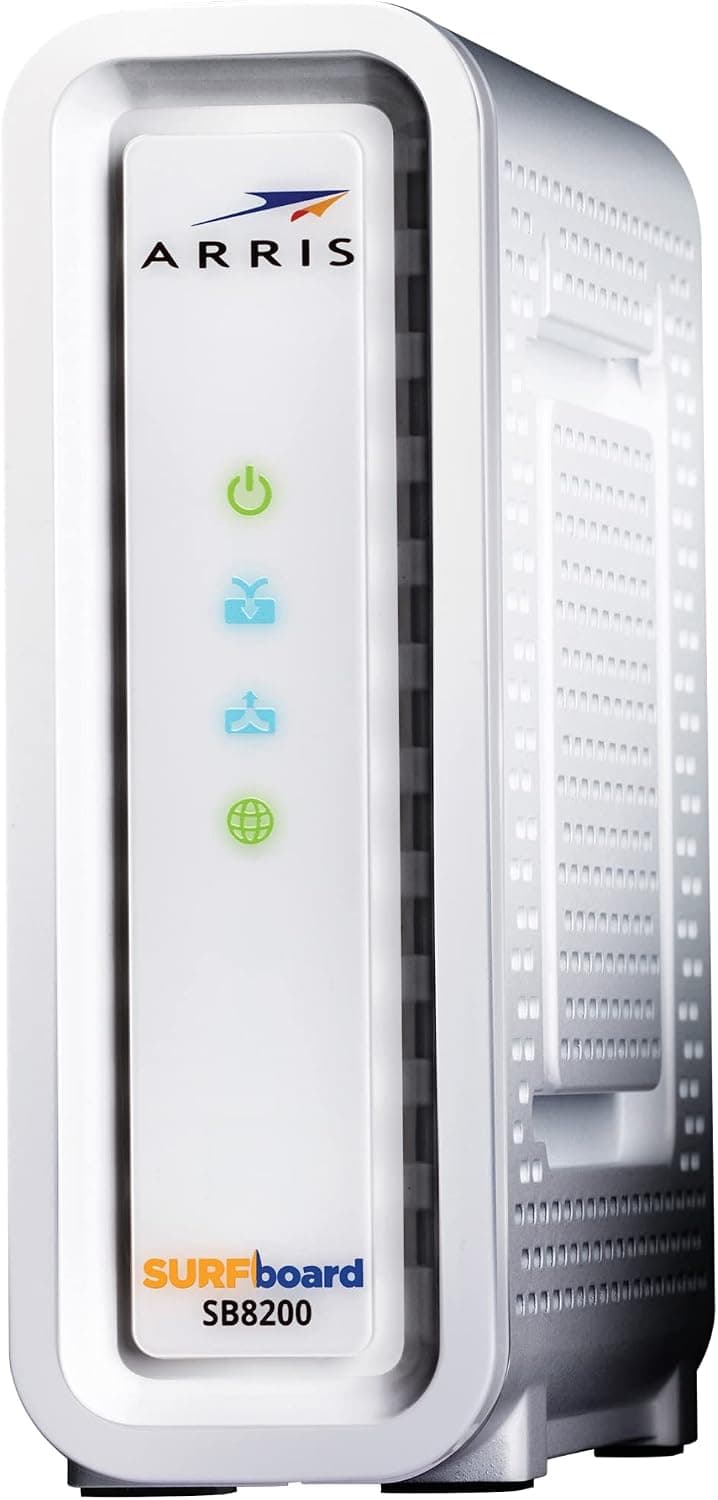
Positioning is mid-range. The DOCSIS 3.1 shelf also holds staples like the Arris SB8200 and the NETGEAR Nighthawk CM3000; the CODA aims at gigabit service at a calmer price.
How It Compares
There are three axes that matter when picking a DOCSIS 3.1 modem: top speed, whether it has a multi-gig port, and how broad its ISP certification is.
With two 1Gbps ports, the CODA is well matched to plans up to 1Gbps and becomes the bottleneck on 1.2Gbps or 2Gbps tiers.
If a multi-gig plan is on your horizon, buy a modem with a multi-gig port instead.
Compared with a DOCSIS 3.0 unit like the ARRIS SB6190, the CODA is a newer standard with more headroom during congested hours and more tolerance for future plan upgrades.
Even on a 300–500Mbps plan, choosing 3.1 means you likely will not have to replace the modem when your ISP bumps speeds.
Before You Buy
1. Your ISP decides whether this works. The most common reason people return a modem like this is not performance — it is that their provider never certified it.
Approved lists get revised, and models do get dropped. Check the list yourself right before ordering.
2. Treat it as unusable on Japanese cable lines. Domestic operators supply their own modems and generally will not provision a retail unit.
"It's DOCSIS 3.1, so it must work here" is the classic mistake.
3. There is no Wi-Fi. You need a separate router or access point for phones and laptops.
If you are returning a rented gateway with Wi-Fi built in, budget for the router too when you run the payback math.
4. Avoid used or refurbished units. Cable modems are provisioned per MAC address, and a unit still tied to a previous subscriber's account can be a headache to register.
A new unit is worth the small premium.
5. Do not take the listing metadata at face value. Amazon listings are matched automatically, and the wrong manufacturer or model number does sometimes appear.
In this article's data the manufacturer (Hitron) matches the title, but confirm the product image, title, and model number match the unit you want. CODA is also a series name, so a different suffix can mean different specs.
6. Heat and placement. This device runs 24/7.
Wedging it into a sealed cabinet invites hard-to-diagnose dropouts. Leave clearance above and around it.
Best Use Cases
- North American cable subscribers paying a monthly modem rental — this is the product's core purpose, and the savings compound the longer you keep it.
- Anyone on a gigabit plan who wants to use it fully over wired links — 4K streaming, big downloads, and online gaming all benefit from a modem that is not the limiting factor.
- DIY network builders who want modem and router separated — you keep the freedom to swap routers whenever you like.
- Not a good fit for: fiber or DSL subscribers, anyone whose ISP has not certified this model, people who want an all-in-one Wi-Fi gateway, and anyone planning to move above 1Gbps. Cable subscribers in Japan should generally rule it out.
FAQ
Q. Can I use it on a Japanese cable line? A.
Assume no. All certified ISPs are North American, and domestic operators normally require their own supplied modem.
Q. Does it have Wi-Fi?
A. No. It is a modem only; you need a separate router or access point.
Q. Will it handle plans faster than 1Gbps? A.
Its Ethernet ports cap a single device at 1Gbps. For 1.2Gbps or 2Gbps service, look at a modem with a multi-gig port.
Q. Does it work on DOCSIS 3.0 networks? A.
Yes, it is backward compatible — but you get none of the 3.1 advantages, so compare the price gap against a cheaper 3.0 unit.
Q. How does it review? A.
1,226 reviews at 82% positive (4.1 of 5) as of September 2026.
Most negative reports appear to be about certification and setup rather than performance.
Q. How long until it pays for itself? A.
At common rental rates, roughly one to two years. Run the numbers with your own bill and the current street price.
Product Disclosure (Amazon)
- Manufacturer: Hitron
- Seller: Amazon US
- Fulfilled by: Amazon US
- ASIN: B0981553MT
- Note: This article covers a manufacturer-made product based on Amazon listing details.