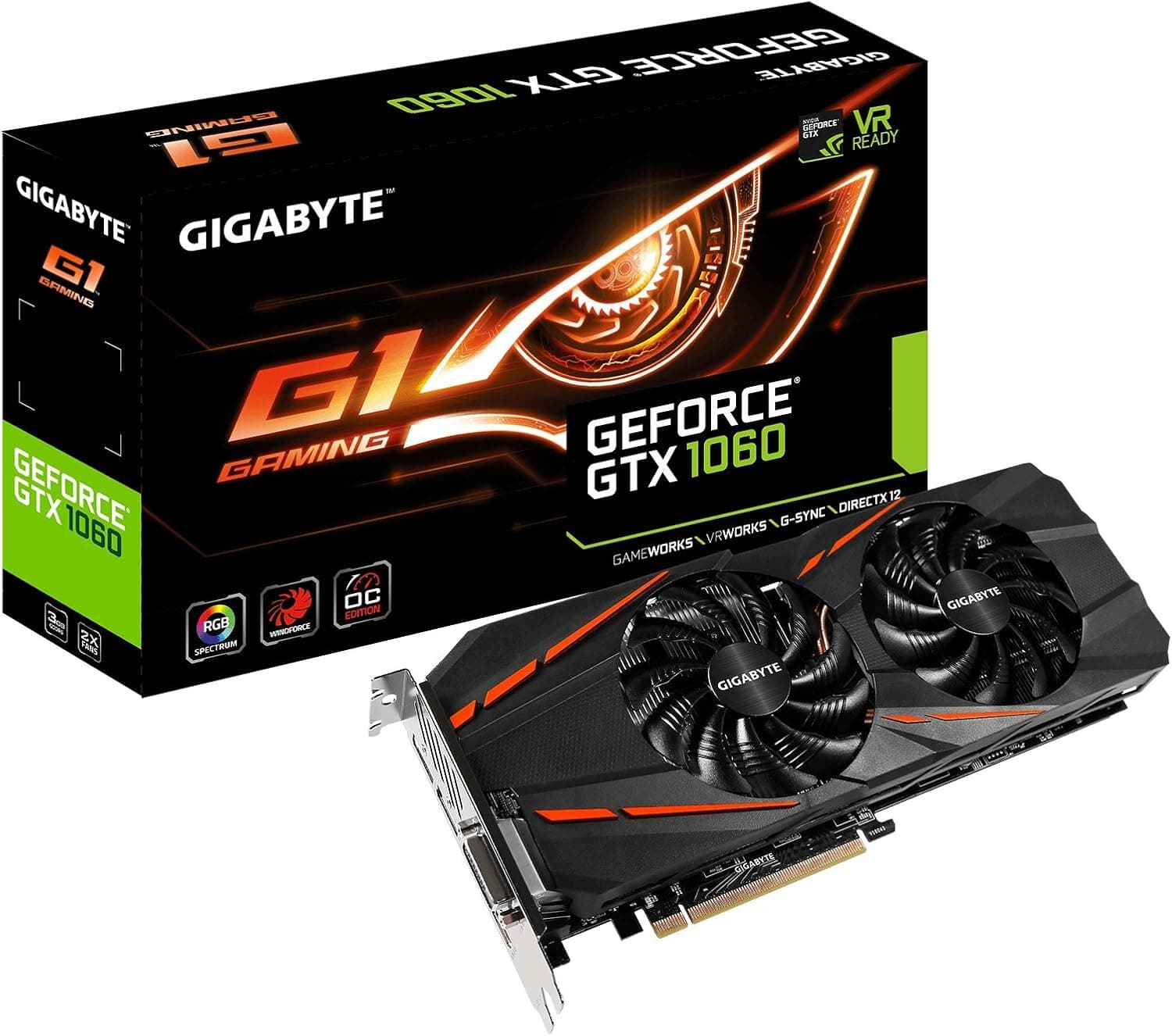
This article covers GIGABYTE ビデオカード GEFORCE GTX 1080搭載 ゲーミングモデル グラフィックボード GV-N1080XTREME GAMING-8GD-PP.
Overview
The GIGABYTE GV-N1080XTREME GAMING-8GD-PP is a high-end graphics card powered by the NVIDIA GeForce GTX 1080, part of the Pascal architecture. Launched in 2016, this card features a heavily custom PCB and cooling solution designed for enthusiasts seeking maximum performance. The GPU chip is a GP104 die built on a 16nm process, with 2560 CUDA cores and a boost clock reaching 1936 MHz in OC mode — significantly higher than the reference 1733 MHz. It carries 8GB of GDDR5X memory on a 256-bit bus, delivering 320.3 GB/s of bandwidth, ample for smooth 1440p gaming. Cooling is handled by GIGABYTE’s WindForce 3X system with three 100mm Stack Fans arranged for high static pressure and airflow. The card also features a PCB coating for moisture and dust resistance, plus dual 8-pin power connectors for stable overclocking. Bundled accessories include an Xtreme SLI bridge and a VR front expansion panel, making it a versatile choice for multi-GPU setups or VR gaming. While no longer at the cutting edge, the GTX 1080 remains a solid performer in the mid-high segment. In today’s used market, it offers strong value for budget-conscious gamers who want high frame rates at 1080p or 1440p without breaking the bank.
Compatibility Guide
The GV-N1080XTREME is a PCIe 3.0 x16 card, fully backward compatible with PCIe 4.0/5.0 slots. Its tri-fan cooler makes the card roughly 2.5 slots thick, so ensure your case has enough PCIe clearance and adequate airflow. Power requirements are two 8-pin PCIe connectors; a 450W PSU is the minimum, but 550W or higher is recommended for stability. The card offers three DisplayPort 1.4, one HDMI 2.0, and one dual-link DVI-D output, supporting multi-monitor setups up to 4K. Keep in mind that the GTX 1080 lacks hardware ray tracing and DLSS support, so games relying on these features will need a newer card.
Product Info
Released in May 2016, the GIGABYTE GTX 1080 Xtreme Gaming initially retailed for around $700–800 USD. Today, used units typically sell for $200–$300 (approx. ¥29,502 on Japan). The card carries a 1-year manufacturer warranty (check seller terms). It sits in the mid-high tier of the GPU market — outpaced by modern RTX 3060/4060 in ray tracing performance but still competitive in raw rasterization.
Best Use Cases
Budget 1440p gaming: The GTX 1080 handles most eSports titles and many AAA games at 1440p with high settings and 60+ FPS. Perfect for gamers who don’t need ray tracing and want to maximize frame rates on a budget. Not suitable for 4K gaming beyond lighter titles. Entry-level VR: Meets the recommended specs for first-generation VR headsets (HTC Vive, Oculus Rift). Users can enjoy VR experiences without investing in a much pricier card. Avoid if aiming for high-resolution VR (Valve Index 144Hz, HP Reverb G2) — performance will fall short. * Secondary PC or HTPC: With its multi-output ports and solid 1080p performance, this card works well as a gaming GPU for a living room PC or a secondary rig for local multiplayer. Not ideal as a primary card for a brand-new build — newer options offer better features and efficiency. ## Alternatives
Direct competitors within the same era include the GTX 1070 Ti and the AMD Radeon RX Vega 56. The GTX 1070 Ti has slightly fewer CUDA cores and lower clocks but similar power draw. The RX Vega 56 offers HBM2 memory with higher bandwidth but consumes more power (210W) and can be less consistent in driver support. Against modern budget cards like the RTX 3050 or RX 6600, the GTX 1080 often wins in raw performance, but the newer cards support ray tracing, DLSS/FSR, and have lower power consumption. If you can stretch the budget, an RTX 2060 Super or used RTX 2070 would provide a better overall feature set.
Things to Consider
The GTX 1080 Xtreme Gaming is now a decade-old design. Used units may show fan wear, thermal paste degradation, and varying overclocking headroom. Always buy from a reputable seller with some return policy. Its 8GB VRAM is becoming tight in modern titles with high-resolution textures — expect to lower texture quality in some 2025–2026 releases. The card’s length (~29 cm) can be an issue in compact cases; measure your case’s GPU clearance. Finally, the lack of ray tracing and DLSS means you miss out on visual improvements and performance multiplier features. If these are important, look at RTX 20-series or newer cards. ## FAQ Q: Is the GTX 1080 still good in 2026? A: Yes, for 1080p and 1440p gaming at medium to high settings. It struggles with ray tracing and 4K, but for eSports and older AAA titles, it holds up well. Q: What power supply do I need? A: At least 450W, but a quality 550W or 650W unit is recommended to account for spikes and leave headroom for overclocking. Q: GTX 1080 vs RTX 3060 — which is better? A: In raw rasterization, the GTX 1080 often outperforms the RTX 3060. However, the RTX 3060 has
Product Disclosure (Amazon)
- Manufacturer: GIGABYTE
- ASIN: B01HGIQ4AI
- Note: This article covers a manufacturer-made product based on Amazon listing details.