Game Overview
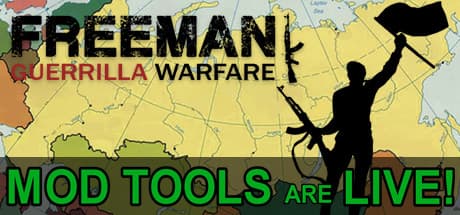
Freeman: Guerrilla Warfare - Lead Your Faction in a World of Chaos combines first-person gunfights with troop command, resource management, and territorial conflict. You begin with limited assets, earn money, recruit soldiers, and turn a vulnerable group into a faction capable of challenging rivals.
Progress is therefore measured not only by enemies defeated but also by whether each operation leaves your organization stronger.
The core loop involves preparing funds and manpower, selecting a target, entering battle, and reinvesting the outcome in further expansion. Combat takes place from a first-person perspective, so strategic preparation does not replace marksmanship.
Success depends on both building a viable force and surviving long enough to influence the battle yourself.
How the FPS and Strategy Layers Connect
The distinguishing idea is that you act as commander and frontline fighter at the same time. A well-prepared army can improve your position, but you still need to aim, move, and fight once combat begins.
Strong shooting alone is also insufficient if poor recruitment or resource decisions leave the faction unable to sustain another campaign.
Unlike a match-based competitive shooter, battles contribute to a longer struggle involving armies and territory. The appeal comes less from isolated rounds and more from the accumulated story of rising from modest beginnings.
It is particularly relevant to players who find hands-off strategy combat too distant but want more lasting consequences than a conventional FPS match provides.
Managing a Growing Faction
Because the campaign begins with few resources, immediate large-scale conquest is less sensible than building a force you can maintain. Recruiting more troops is useful only if the faction can absorb losses and continue operating afterward.
Choosing when to fight, and which rival to confront, matters as much as winning a single engagement.
On the battlefield, treating your soldiers as part of the plan highlights the hybrid design better than charging ahead alone. Early encounters can be used to learn both shooting and command controls before committing to more consequential territorial struggles.
Judge an operation by the faction's condition afterward, not merely by whether the last opponent fell.
System Requirements
The listed minimum configuration is Windows 7 with an Intel Core i5 4330M, a GeForce GTX 750 Ti or AMD Radeon R7 370, and 8 GB of RAM. The game requires DirectX 11 and 18 GB of available storage.
These components indicate that a current high-end graphics card is not the baseline requirement.
Only minimum requirements are provided in the supplied data, with no recommended configuration available. A minimum specification should be treated as a starting point for running the game, not a promise of stable performance in every troop-heavy battle.
Systems near that baseline may need reduced resolution or visual settings, followed by testing during actual combat.
Leaving storage space beyond the stated requirement is also sensible for updates and temporary files. Laptop users should confirm that the game is using the dedicated GPU rather than relying only on a processor's integrated graphics.
Reception and Common Expectations
Steam reception is mixed. The combination of personal gunplay and faction building gives the game an identity that conventional mission-based shooters lack.
Players receptive to experimental genre combinations may enjoy seeing the consequences of a firefight feed back into army growth and territorial progress.
The same combination can be divisive. Someone expecting only highly refined competitive shooting may view management as an interruption, while a player seeking a detailed standalone strategy simulation may want greater distance from direct combat.
The central purchase question is whether switching between commander-level decisions and hands-on fighting sounds appealing rather than distracting.
Languages and Listed Features
The listed languages are English, Simplified Chinese, and Russian. Japanese is not included in the supplied language data, which is an important limitation for anyone who needs Japanese menus or explanations.
Because the game includes recruitment and resource decisions in addition to shooting, understanding interface text can materially affect playability.
KK Game Studio is listed as both developer and publisher, and the release date is October 5, 2019. Listed Steam features include achievements, trading cards, Workshop support, and multiplayer.
Availability and current activity can change, so anyone buying specifically for multiplayer or community content should verify the latest store information first.
Who Should Play It
Freeman: Guerrilla Warfare suits players who want long-term army development and direct shooting in the same campaign. It is a stronger fit for those who enjoy starting with little, recovering from losses, and deciding how to spend limited resources.
Players willing to accept some roughness in exchange for an unusual genre blend are the clearest audience.
It also suits people who prefer choosing their own opponents and route to expansion over following a strictly linear campaign. The key is enjoying preparation and recovery as meaningful parts of combat rather than obstacles between firefights.
Caveats and Who Should Skip It
Players seeking rapid competitive matches or a tightly scripted story campaign may find the broader management loop too slow. Recruiting troops, gathering funds, and reorganizing after battle are central rather than optional distractions.
If polished gunplay is the only priority, a dedicated FPS should be compared before deciding.
The absence of listed Japanese support is another substantial caveat. There is also no recommended specification in the supplied data, so the minimum configuration cannot establish what hardware is needed for a preferred resolution or frame rate.
Verify current language, multiplayer, and Workshop details on the product page if any of them are essential to your decision.