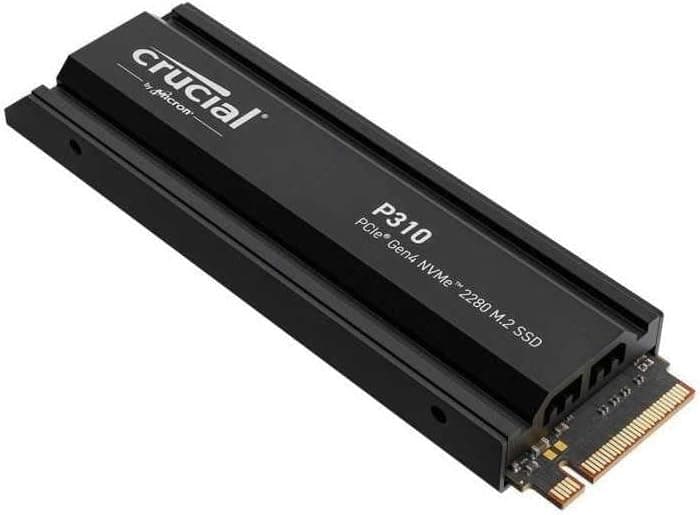
Overview
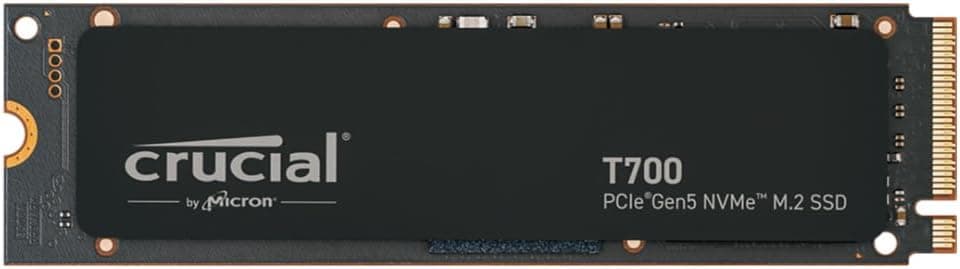
Crucial's P510 1TB is a high-performance NVMe SSD built around Micron's latest 276-layer TLC 3D NAND and the Phison E31T controller. It pushes sequential read speeds up to 11,000MB/s over a PCIe 5.0 x4 interface, making it one of the fastest consumer SSDs available today.
Despite its DRAM-less design, the P510 uses Host Memory Buffer (HMB) to maintain consistent random-access performance, so everyday tasks feel snappy and game loading times drop noticeably. For reference, even a PCIe 4.0 SSD tops out around 7,000MB/s, so the jump to Gen5 is significant.
Priced competitively for a Gen5 drive, the P510 is aimed at enthusiasts who own a compatible motherboard and want to eliminate storage bottlenecks. However, you'll need a board with a PCIe 5.0 M.2 slot to unlock its full potential.
Compatibility Guide
- Form factor: M.2 2280 – fits any desktop motherboard with a matching slot.
- Interface: PCIe 5.0 x4 (backward compatible with PCIe 4.0 x4, but at reduced speed).
- If you install it in a PCIe 4.0 slot, you'll get roughly 7,000MB/s peak – still fast, but not the headline number.
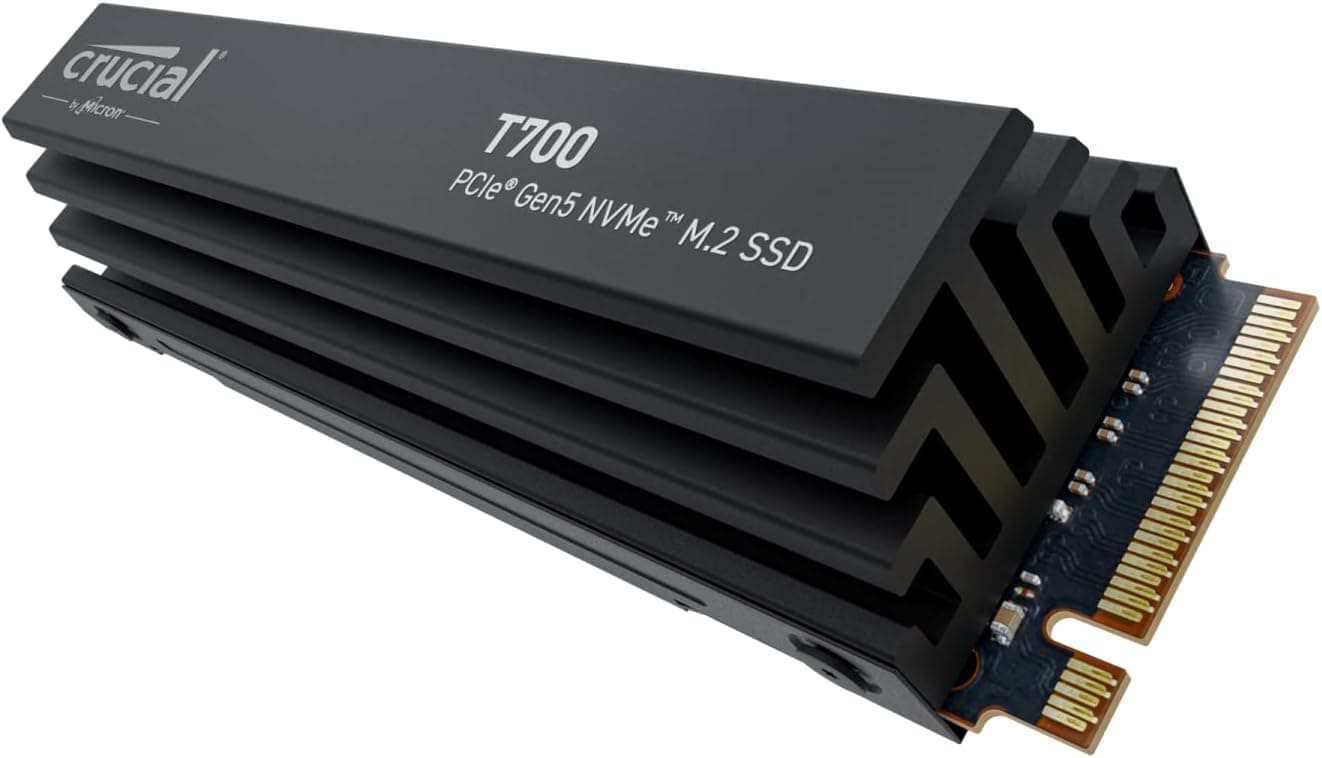
- Cooling is critical: Gen5 SSDs run hot during sustained writes. Use your motherboard's built-in M.2 heatsink or an aftermarket SSD cooler. Without adequate cooling, thermal throttling may kick in.
Product Info
Released in January 2025, the Crucial P510 1TB (CT1000P510SSD8-JP) combines Micron's 276-layer TLC NAND with the Phison E31T controller. It offers sequential reads up to 11,000MB/s and writes up to 9,500MB/s, with random 4K performance supported by HMB.
Positioned as a high-end consumer SSD, it undercuts many DRAM-equipped Gen5 rivals while still delivering excellent real-world speed. The drive comes with a 5-year or 600TBW warranty (whichever comes first) and is widely available at major retailers including online retailers.
Best Use Cases
Gamers who want the fastest load times in DirectStorage-ready titles: Open-world games like Cyberpunk 2077 or Starfield* benefit from Gen5 bandwidth when assets stream in on the fly. You'll feel it in reduced stutter and faster scene transitions.
- Content creators editing 4K/8K video or working with RAW photo libraries: Write speeds of 9,500MB/s drastically cut down export and backup times. If you move large files daily, the P510 pays for itself in saved time.
- Early adopters with a new PCIe 5.0 motherboard: If you've already invested in a Z790/X670E or newer board, the P510 is a natural fit to leverage the Gen5 lane.
Not ideal for users still on a PCIe 3.0/4.0 platform and on a tight budget – you'd be paying a premium for speed you can't fully use. Also, if your workload is 95% sequential reads (e.g., a game library drive), a lower-cost Gen4 SSD like the Crucial T500 may serve you just as well.
Things to Consider
- Requires a PCIe 5.0 M.2 slot for full speed: Check your motherboard manual. Intel Z690/Z790 or AMD AM5 boards with Gen5 M.2 are needed. They're becoming standard on mid-range and higher boards, but not all B650/B760 boards include them.
- Heat is a real concern: Sustained writes can push temperatures into the high 70s °C. Always use a heatsink, and if your motherboard's included heatsink is small, consider an aftermarket one.
- DRAM-less design: HMB works well for typical gaming and desktop use, but under extreme multi-threaded random write loads (e.g., a database server), DRAM-based SSDs maintain a performance edge.
- Competitors: Samsung 990 Pro and WD SN8100 offer similar Gen5 speed with onboard DRAM but cost more. The P510 trades DRAM for a lower price point while still delivering excellent everyday performance.
FAQ
Q: Can I use the P510 in a PCIe 4.0 slot?
A: Yes, it's fully backward compatible. You'll get speeds up to the PCIe 4.0 cap (roughly 7,000MB/s). That's still very fast, but you're paying extra for Gen5 capability you won't use. If you're on a Gen4-only system, a cheaper Gen4 drive may be smarter.
Q: Will it work in a PlayStation 5?
A: The PS5 accepts M.2 2280 NVMe SSDs, but Sony currently does not officially support PCIe 5.0 drives. The P510 will physically fit and work, but its speed will be limited to PCIe 4.0 levels, and it may not meet Sony's recommended 5,500MB/s minimum requirement. For PS5, a PCIe 4.0 drive like the Crucial T500 is a safer and more cost-effective choice.
Q: What is the TBW and how long should it last?
A: Crucial rates the 1TB P510 at 600TBW. That translates to roughly 1.6TB of writes per day for a year. For a typical gamer writing maybe 20-50GB of game updates per day, the drive would last over 30 years in theory. Even for heavy creative professionals writing 100GB daily, it's still about 16 years. The NAND quality is excellent, and the HMB design imposes minimal write amplification, so longevity is a non-issue for virtually all consumers.
Product Disclosure (Amazon)
- Manufacturer: Crucial(クルーシャル)
- ASIN: B0F5W54W2C
- Note: This article covers a manufacturer-made product based on Amazon listing details.