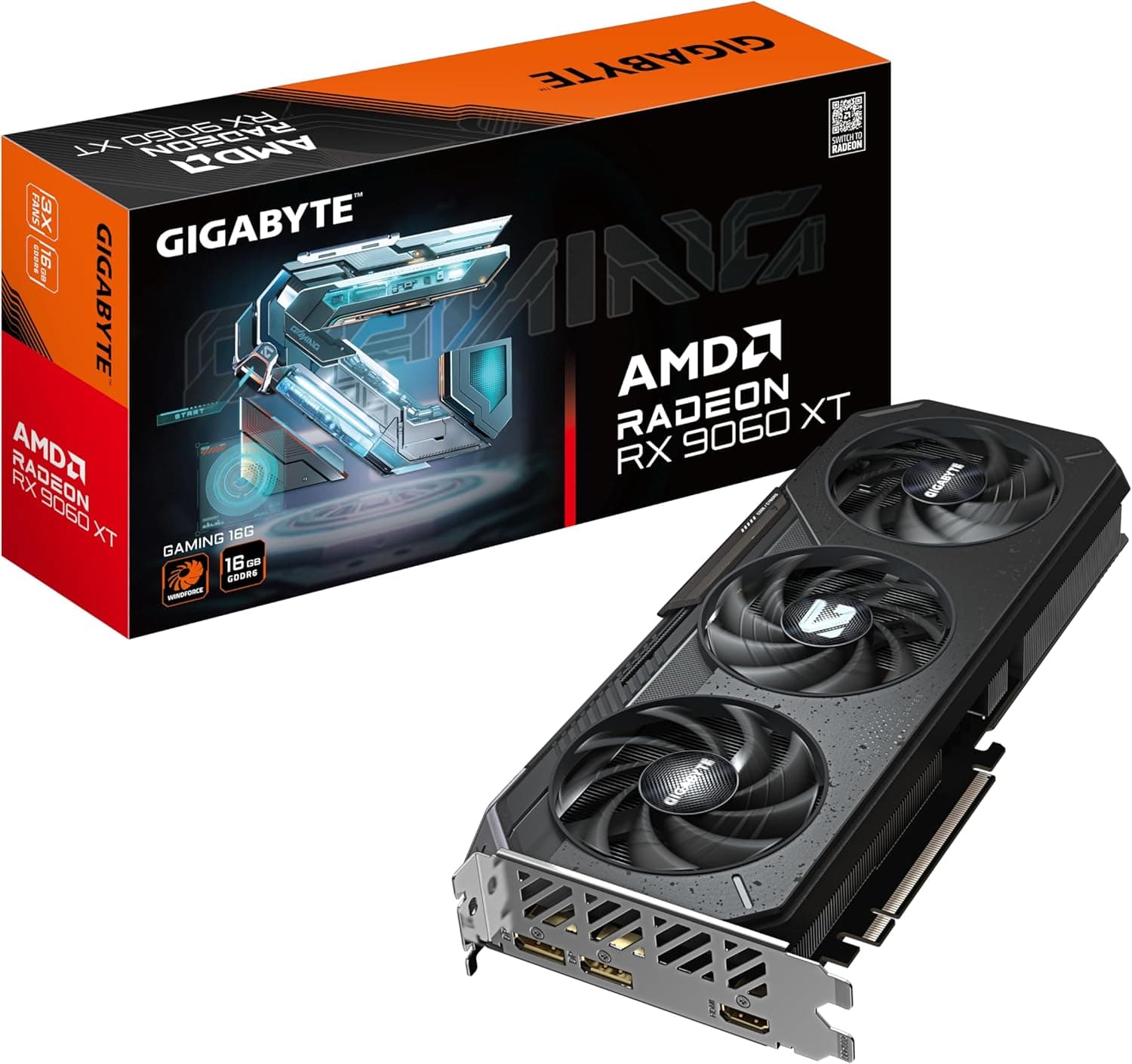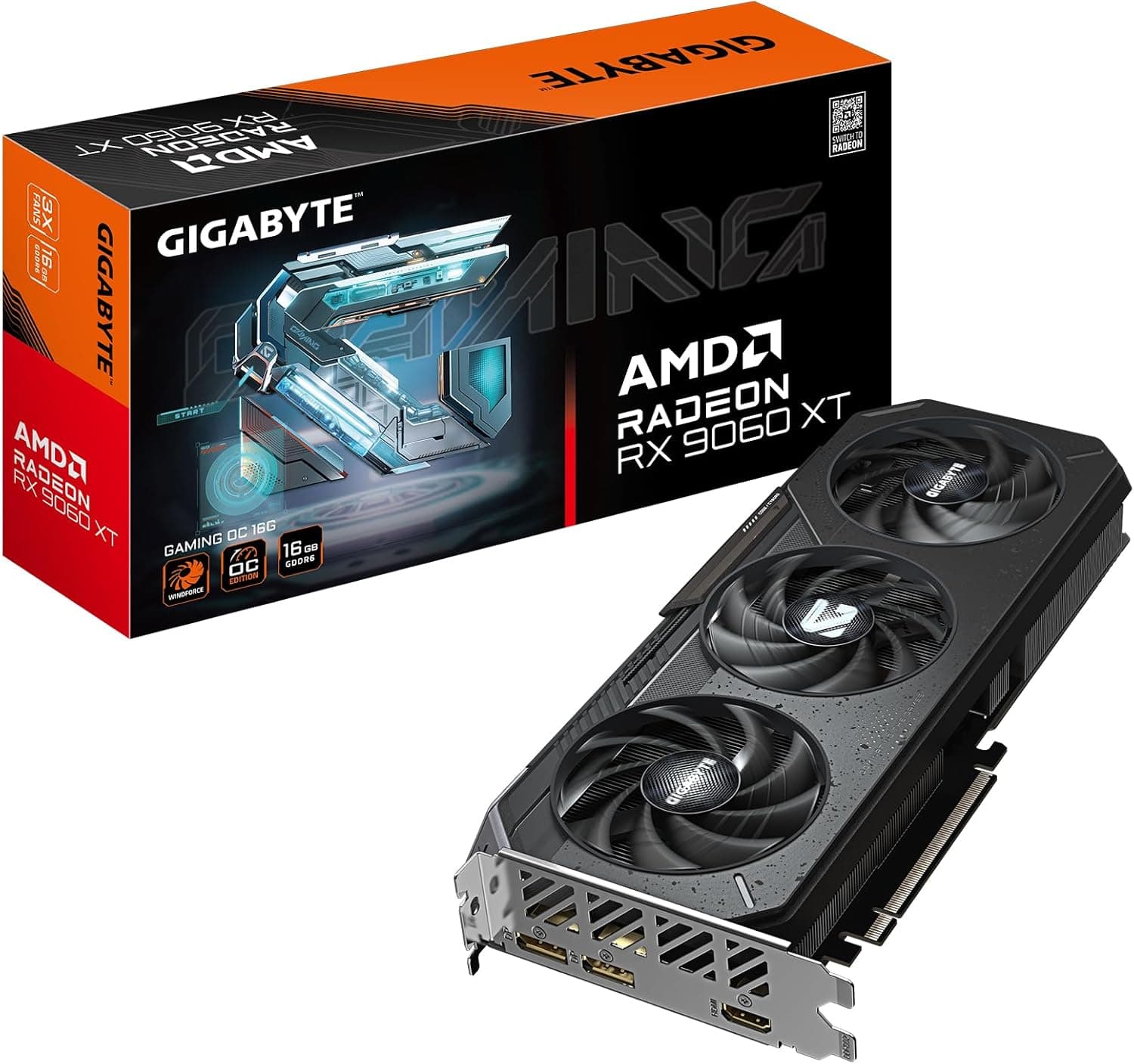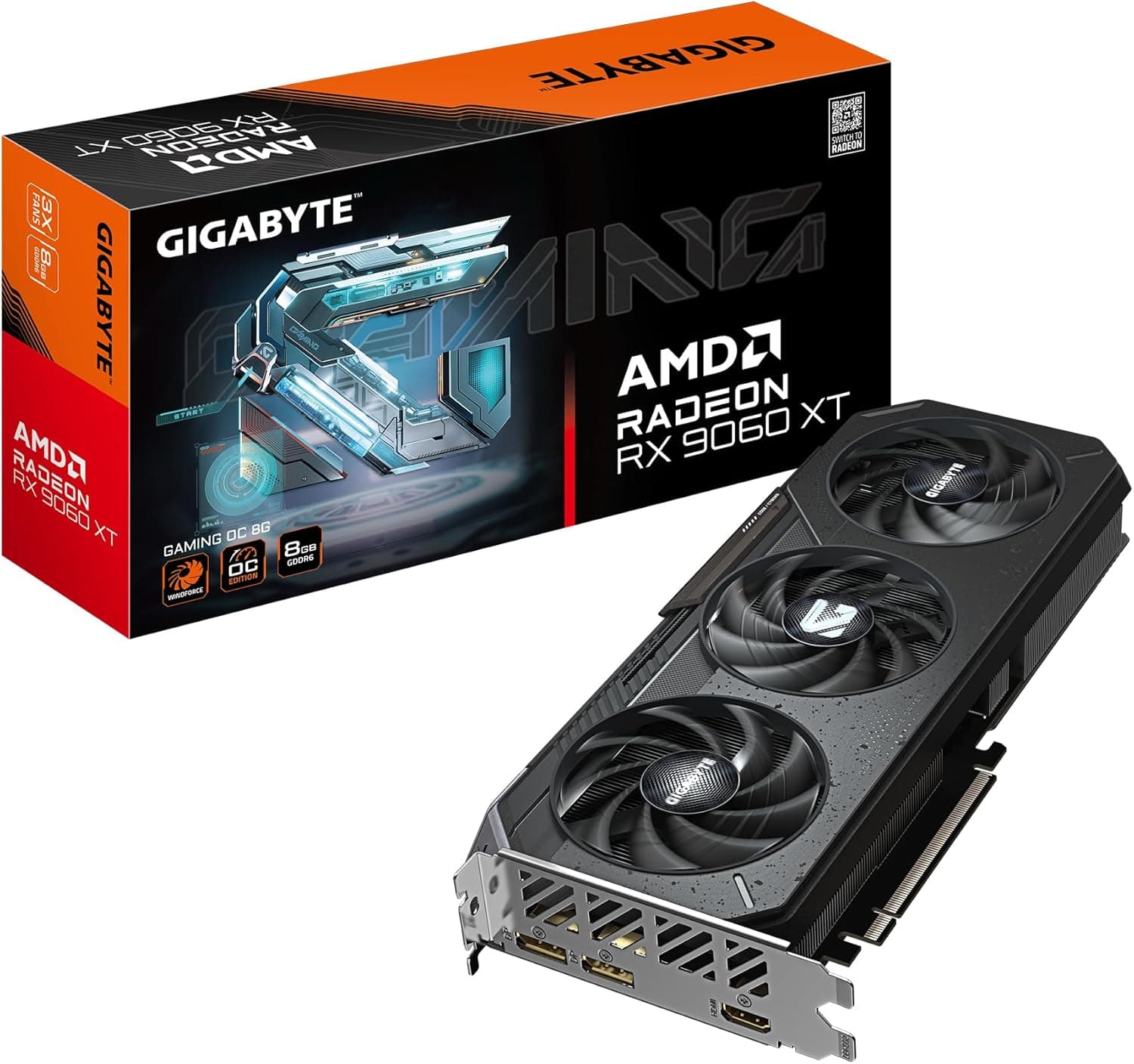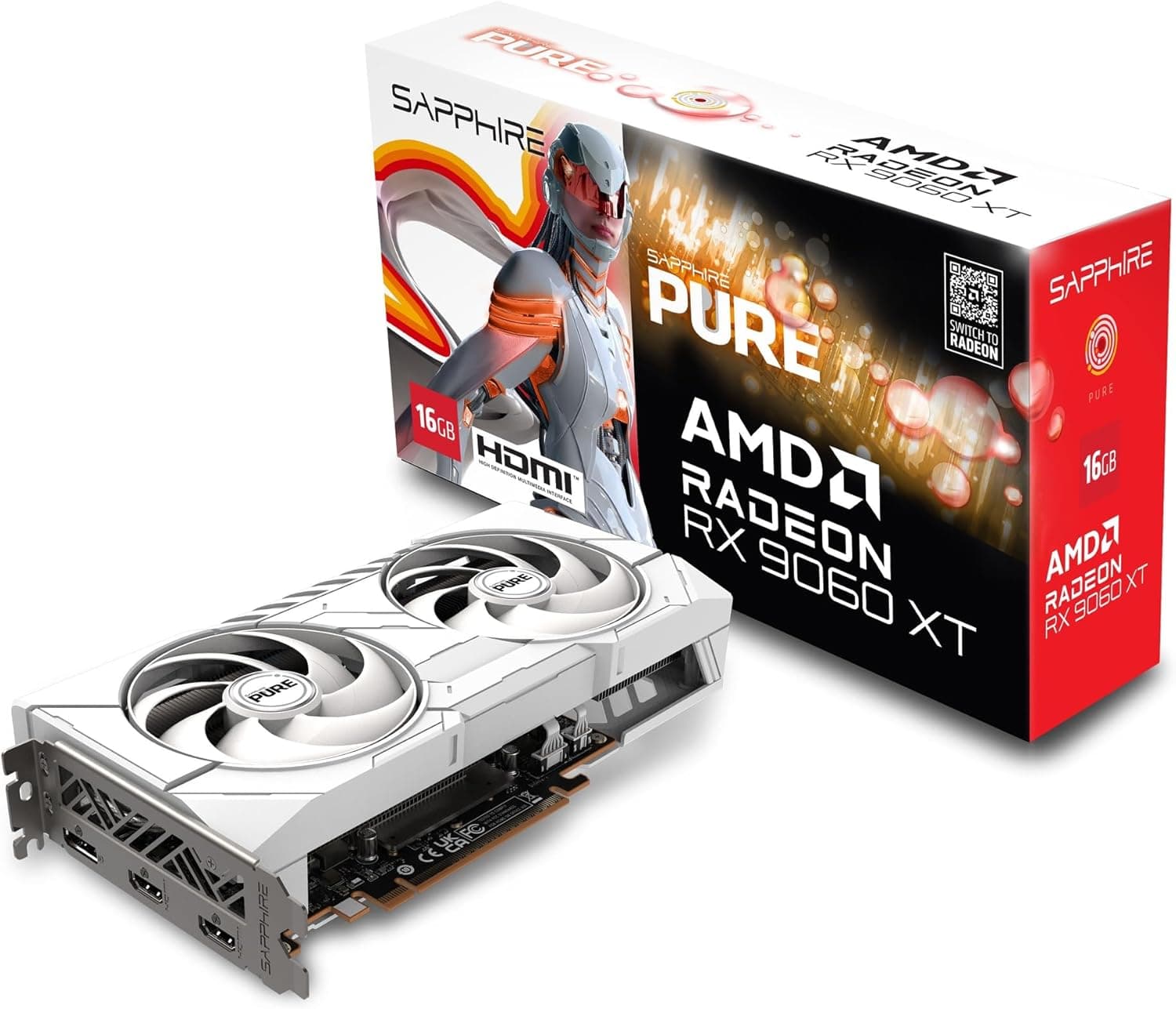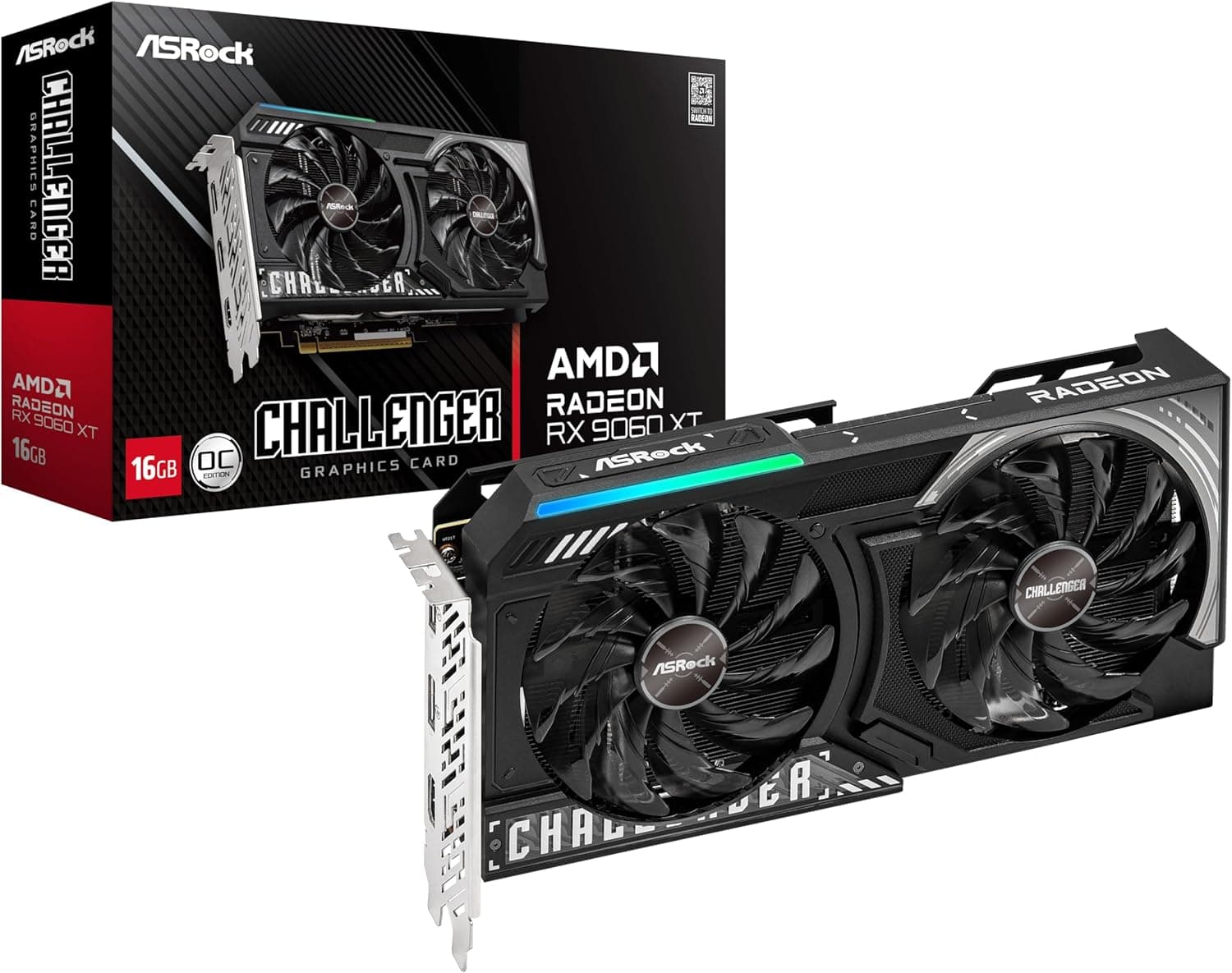
This article covers the ASRock Challenger RX 9060XT 16GO (listed in Japan as 【限定】ASRock 3年保証 グラフィックボードChallenger RX 9060XT 16GO AMD Radeon RX9060XT 搭載 RX9060XT CL 16GO), organized from its specifications and listing details.
Overview
The ASRock Challenger RX 9060XT 16GO is a Radeon RX 9060 XT card built on the RDNA 4 "Navi 44" GPU. It carries 16 GB of GDDR6 on a 128-bit bus at 20 Gbps.
The boost clock is 3290 MHz, the game clock is 2700 MHz, and the interface is PCIe 5.0 x16.
In short, it suits players who want to run Full HD to QHD games without worrying about running out of VRAM. 8 GB variants exist in this class, but this model has 16 GB.
That capacity is the main reason to choose it, especially for texture-heavy recent titles.
The listing highlights a 3-year warranty. The data does not tell us whether it applies to every seller, so check the conditions on the product page before buying.
Key Specs
| Item | Value |
|---|---|
| GPU chip | Navi 44 (RDNA 4) |
| Shaders / Compute Units | 2048 / 32 |
| Boost / Game clock | 3290 MHz / 2700 MHz |
| VRAM | 16 GB GDDR6 (20 Gbps, 128-bit) |
| RT / AI accelerators | 3rd Gen / 2nd Gen |
| PassMark (G3D) | 18147 |
| Release | Dec 17th, 2025 |
From 20 Gbps on a 128-bit bus, the theoretical memory bandwidth works out to 320 GB/s. Bandwidth is narrower than on higher-end cards, so this is a card with large capacity but a slim bus.
The PassMark G3D score of 18147 is a single synthetic indicator and may not match what you see in individual games.
Compatibility Guide
The card is PCIe 5.0 x16 but also fits PCIe 4.0 and 3.0 slots.
Bandwidth limits may reduce performance there, so accept that trade-off if you pair it with an older motherboard.
It needs one 8-pin PCIe power connector. This site's guideline for the power supply is 650 W, and you should first confirm that your PSU has a free 8-pin output.
If cables are short, check the PSU's outputs rather than relying on splitters.
The card is a dual-slot, dual-fan design. The card length is not in our data, so compare the manufacturer's dimensions with your case's maximum GPU length.
Small cases and builds with front radiators are where interference is most likely.
Product Info
The Amazon.co.Check the retailer's page for the latest price.
Prices change often and move with sales, so check the product page for the latest amount before buying.
Check the retailer's page for the latest user reviews. With a modest count, treat this as a rough guide.
The release is listed as December 17, 2025. Both the seller and the shipper are Amazon.co.jp.
Best Use Cases
- Full HD high-refresh players: the 3290 MHz boost clock and 16 GB of VRAM leave room to raise settings. Heavy ray tracing may call for a higher-tier card.
- QHD medium-to-high players: the generous VRAM suits high texture settings. The 128-bit bus is slimmer than on higher-end models, so go easy on 4K.
- Creators with light workloads: 16 GB of VRAM is useful working space, and 2nd Gen AI accelerators are included. It is not meant for render-heavy professional work.
Things to Consider
First, the memory bus is 128-bit. For bandwidth-hungry uses and 4K resolution, this can be a limit.
Large VRAM is a strength, but it does not widen the bus.
Second, if ray tracing is your top priority, compare NVIDIA cards in the same price range. This site does not benchmark games, so check trusted reviews for the size of any gap.
Third, TDP is not in our data. Check ASRock's specification page for power draw, and use the recommended PSU capacity above as your baseline.
Fourth, the 3-year warranty is a conditional claim on the listing. Confirm the terms, such as whether the item is sold and shipped by Amazon.co.jp, on the product page.
Finally, listing details on shopping pages are sometimes wrong. Confirm from the images and title that the product is the ASRock Challenger RX 9060XT 16GO before ordering.
FAQ
Q: Does this card work with a PCIe 3.0 motherboard?
A: It fits and runs, but bandwidth limits may reduce performance. A PCIe 4.0 or newer platform is safer.
Q: Which power connector does it need?
A: One 8-pin PCIe connector. Use the 650 W in the spec sheet as your PSU guideline.
Q: Is 16 GB worth choosing over an 8 GB model? A: Yes if you want to avoid running out of VRAM.
The real difference depends on the game and settings.
Q: Can I use it for 4K?
A: It can run, but given the 128-bit bus and similar factors, QHD is the safer upper target.
Product Disclosure (Amazon)
- Manufacturer: ASRock
- Seller: Amazon.co.jp
- Fulfilled by: Amazon.co.jp
- ASIN: B0F8B59WP7
- Note: This article covers a manufacturer-made product based on Amazon listing details.